Decoding Beck's Triad: Cardiac Tamponade for EMTs
Master Beck's Triad for the NREMT. Learn the pathophysiology of cardiac tamponade, how to identify the three classic clinical signs, and key field treatments.
· 14 min read
Read →
Study OB/GYN emergencies for the NREMT exam. Master APGAR score calculations, childbirth stages, preeclampsia, breech presentation, and hemorrhage.
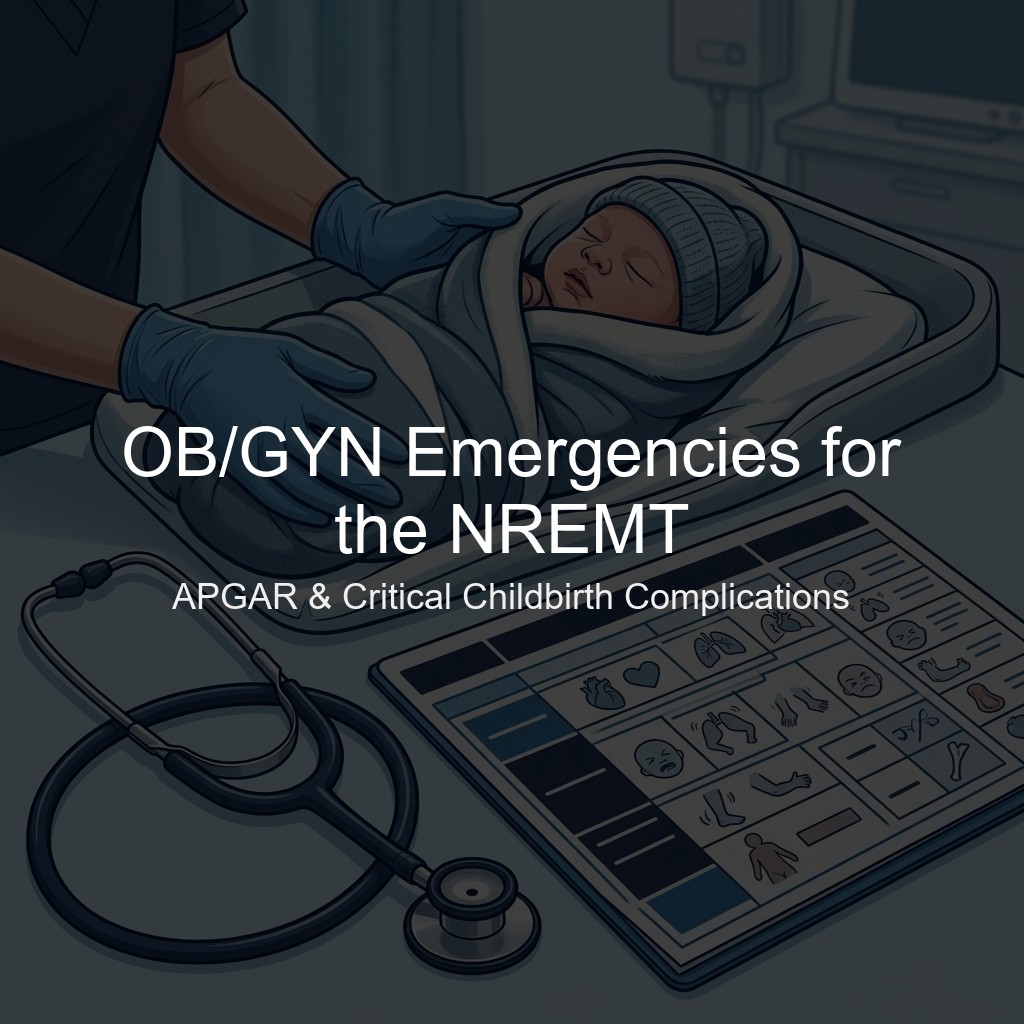
Obstetrics and gynecology (OB/GYN) emergencies represent some of the most high-anxiety calls you will face in prehospital care. Because childbirth is a natural physiological process, the majority of deliveries go smoothly. However, when complications arise, they require rapid recognition and immediate field management.
For the NREMT cognitive exam, you must master the physiological changes of pregnancy, the three distinct stages of labor, the APGAR scoring system, and the management of critical childbirth emergencies.
Understanding the stages of labor helps you determine whether to prepare for an on-scene delivery or initiate immediate transport.
The APGAR score is a standardized assessment tool used to evaluate a newborn’s physical condition and transition to extrauterine life. You must calculate the score at 1 minute and 5 minutes post-delivery.
The APGAR mnemonic represents five parameters: Appearance, Pulse, Grimace, Activity, and Respiration. Each category is scored 0, 1, or 2 points.
| Parameter | 0 Points | 1 Point | 2 Points |
|---|---|---|---|
| Appearance (Color) | Blue or pale all over | Pink body, blue extremities (acrocyanosis) | Completely pink |
| Pulse (Heart Rate) | Absent | Slow (less than 100 bpm) | Rapid (over 100 bpm) |
| Grimace (Irritability) | No response to stimulation | Grimace or weak cry | Vigorous cry, sneeze, or cough |
| Activity (Muscle Tone) | Limp, flaccid | Some flexion of extremities | Active motion, well-flexed |
| Respiration (Effort) | Absent | Slow, irregular, weak cry | Strong, lusty cry |
Preeclampsia is a pregnancy-induced hypertensive disorder that typically develops after the 20th week of gestation.
These represent two major causes of third-trimester bleeding. The NREMT frequently tests your ability to differentiate them.
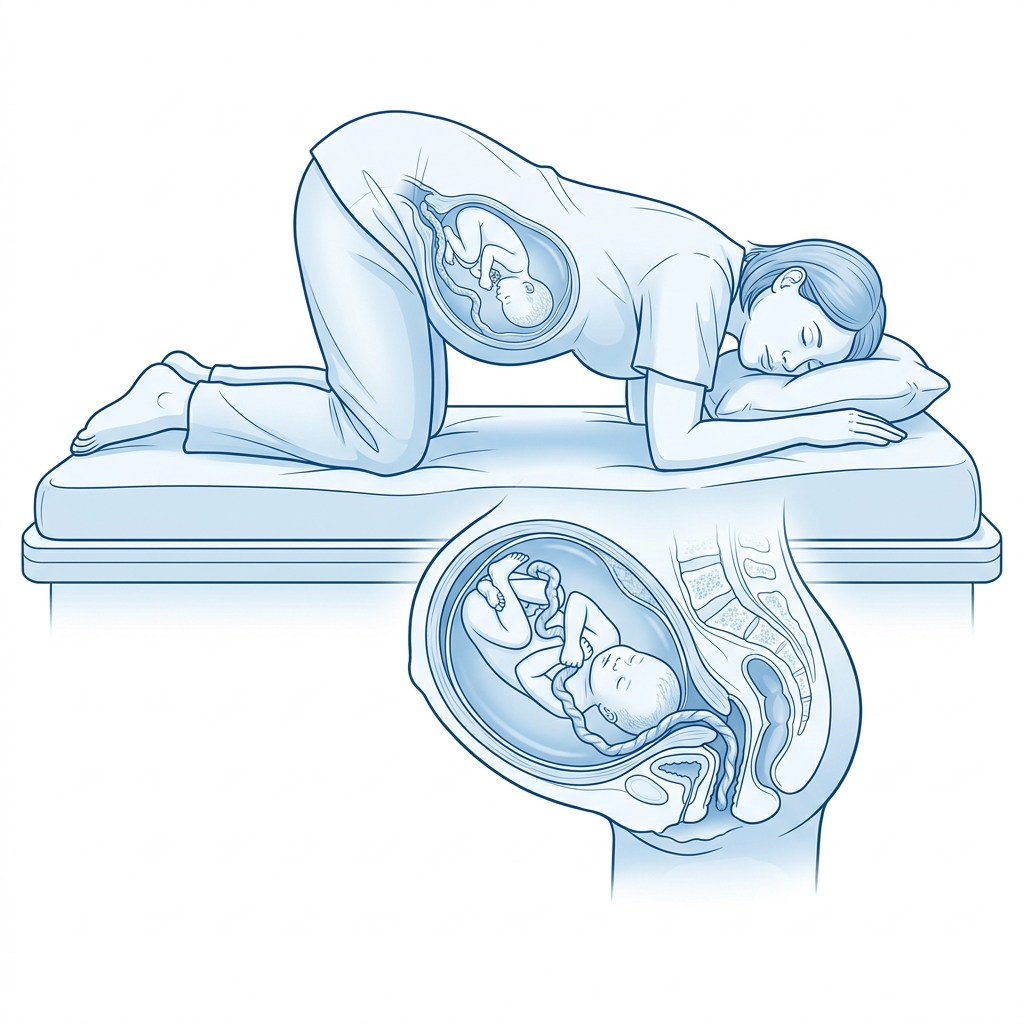
A nuchal cord occurs when the umbilical cord wraps around the baby’s neck during delivery.
A prolapsed cord occurs when the umbilical cord delivers before the baby’s head, causing the head to compress the cord in the birth canal, cutting off the baby’s oxygen supply.
Test your prehospital obstetrics knowledge with this quick check.
During delivery in the field, you notice that the baby's head has delivered, but the umbilical cord is wrapped tightly around the baby's neck. What is your first immediate action?
Filed Under
About the Author
I'm a veteran EMT with 13+ years of field experience in EMS. I started EMT Training Station to help aspiring EMS professionals get the information they need — from training and certification to gear and career advancement. I've worked in Arizona and Michigan and participated in Hurricane Michael FEMA relief.
Master Beck's Triad for the NREMT. Learn the pathophysiology of cardiac tamponade, how to identify the three classic clinical signs, and key field treatments.
Master the Rule of Nines for the NREMT. Learn burn classifications, adult vs. pediatric calculations, fluid resuscitation formulas, and critical field care.
Learn how to write professional patient care report (PCR) narratives that protect your EMS career. Master SOAP vs CHART models and document critical negatives.