How to Become a Flight Paramedic: The Complete Career Track
Learn how to become a flight paramedic. Read this step-by-step career roadmap covering clinical requirements, critical care certifications, and physical standards.
· 8 min read
Read →
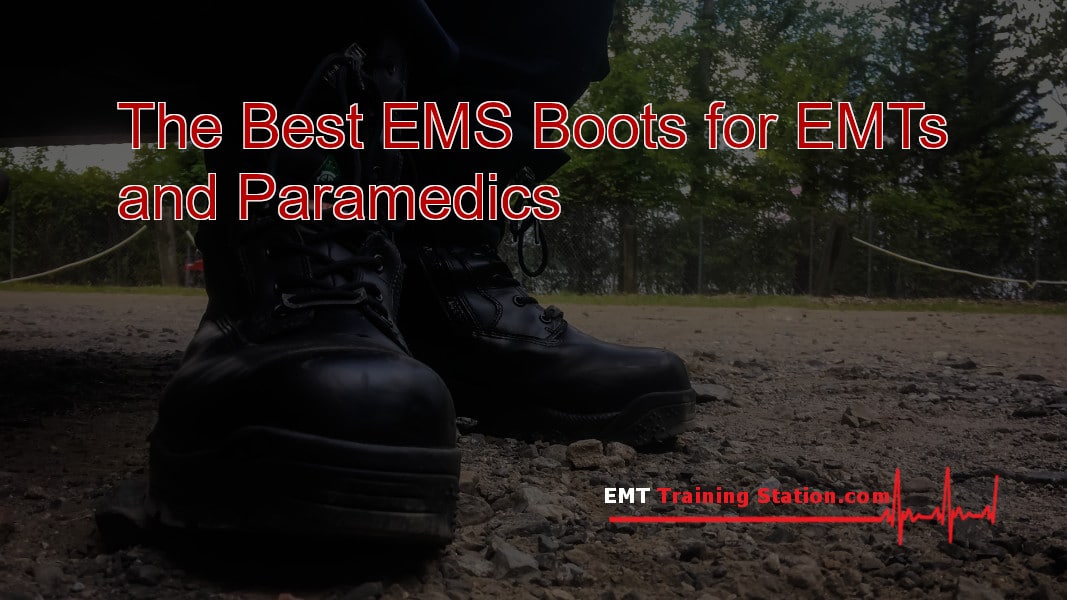
Updated March 2026. A veteran EMT reviews the best EMS boots for any situation — including the best tactical, women's, wildland, urban, summer, winter, plantar fasciitis, and budget options for EMTs and paramedics.
Updated: March 2026
Hi, I’m Mike — a veteran EMT with more than a decade of experience. I want to help you pick the best pair of EMS boots for your career as an EMT or paramedic.
In my experience, the best and most reliable pair of boots are the 5.11 A.T.A.C Shield Boot. They are affordable, comfortable, and meet industry safety standards. These boots are available for both men and women, and they are the boots I personally wear on the job.
This article covers the best EMS boots for various situations and conditions.
| Product | Best For | Price | ||
|---|---|---|---|---|
| 1 | | 5.11 A.T.A.C. Shield Tactical Boot | Best overall EMS boot | Check Price ↗ |
| 2 | | Merrell Moab 2 Tactical Boot | Best tactical EMS boot | Check Price ↗ |
| 3 | | Kenetrek Wildland Fire Boot | Best for wildland firefighting | Check Price ↗ |
| 4 | | Danner Modern Firefighter 8" | Best for urban firefighting | Check Price ↗ |
| 5 | | 5.11 Women's A.T.A.C. 2.0 | Best women's EMS boot | Check Price ↗ |
| 6 | | Under Armour Micro G Valsetz | Best for summer / hot climates | Check Price ↗ |
| 7 | | Wolverine Warrior CarbonMAX | Best for winter / cold weather | Check Price ↗ |
| 8 | | Thorogood Gen-Flex 2 Tactical | Best for plantar fasciitis | Check Price ↗ |
| 9 | | NORTIV 8 Military Tactical Boots | Best budget EMS boot | Check Price ↗ |
When evaluating each boot I focused on the three factors that matter most to first responders:
As a seasoned EMT, one constant companion through every emergency has been my 5.11 A.T.A.C. Shield Boots. Having owned multiple pairs over the years, these boots are the epitome of reliability, comfort, and durability. For a detailed breakdown of safety certifications, sizing advice, and shift comfort tests, check out our hands-on 5.11 A.T.A.C. Shield Boot Review.
Durability That Endures
The A.T.A.C. Shield boasts an impressive lifespan of 3–4 years with proper care. They’ve withstood harsh Michigan winters and corrosive road salt, emerging ready for more.
Comfort in Every Step
The shock-absorbing heel is a godsend for long shifts. Whether sprinting to an emergency or standing for extended periods, comfort is never compromised.
Adaptability Across Seasons
The moisture-wicking lining keeps feet cool and dry even in the heat. Paired with the right socks, extreme temperatures become manageable.
Lightweight and Breathable
Despite being an 8” boot, the A.T.A.C. Shield feels more like a sneaker. Waterproof and breathable — wet feet are never a concern.
Safety as a Priority
Certified to ASTM 2413-17 M I/75 C/75 EH PR and CSA Z195-14. Excellent protection against dropped equipment and debris. Fits most company boot allowances.
Pros
Cons
The Merrell Moab 2 Tactical Boot combines the ruggedness needed for tough terrain with the comfort needed for long shifts. For a detailed breakdown of trail-tested performance, breathability, and sizing tips, read our hands-on Merrell Moab 2 Tactical Boot Review.
Out-of-the-Box Comfort
The moment you slip in, you get the comfort of the original Moab hiking boot — enhanced for duty. Whether navigating urban landscapes or responding in challenging terrain, support and comfort remain constant.
Effortless Wear
A heavy-duty YKK medial zipper makes gearing up fast without compromising security. The bellows tongue keeps out debris. The external lateral stability arms add protection without bulk.
Durability
Waterproof PU coated leather and ripstop textile construction. The rubberized mesh ankle upper and protective rubber toe cap offer excellent resistance to daily wear.
Traction and Agility
The Vibram TC5+ outsole provides dependable traction across surfaces. Despite its robust features, the Moab 2 remains surprisingly lightweight.
Pros
Cons
This boot comes highly recommended by the firefighters I interact with on a daily basis. The Kenetrek Wildland Fire Boot meets NFPA 1977 Standard Requirements for Protective Clothing and Equipment for Wildland Fire Fighting and has been independently lab-tested. For more on fire-line durability and thermal performance, check out our hands-on Kenetrek Wildland Fire Boot Review.
At only 4.2 pounds, it’s lightweight enough to reduce fatigue during long operations. Kevlar laces and stitching add fire resistance without bulk. The minimal break-in period means it’s ready to go right out of the box — critical when readiness is everything.
Pros
Cons
The Danner Modern Firefighter is purpose-built for urban emergency response. The fire-resistant, polishable full-grain leather upper holds up to daily structural firefighting use, while the Danner Dry waterproof protection handles the wet environments that come with it. For an in-depth breakdown of certifications, composite toe safety, and custom fit, read our full Danner Modern Firefighter Review.
Tested for body fluid borne pathogen resistance (ASTM F1671-13), it’s equally suited for pre-hospital work in fire-heavy environments. The Vibram S587 Fire & Ice outsole provides oil-and-slip resistance, heat resistance, and reliable traction on high-angle terrain.
At 4.2 pounds it’s also lightweight — reducing fatigue during long operational shifts. Most responders report no break-in period.
Pros
Cons
Based on conversations with female EMTs in the field, the 5.11 A.T.A.C. Storm Women’s Military Boot consistently earns top marks for fit, durability, and affordability. For a complete guide to anatomical sizing, pathogen protection, and comfort, read our hands-on 5.11 Women’s ATAC Storm Review.
Top Priorities for Female EMTs
Traction was unanimous — the Storm’s oil and slip-resistant construction is essential for emergency stability. Bloodborne pathogen resistance resonated strongly given the nature of EMS work. The polishable suede leather toe adds durability and a professional appearance.
Comfort for Long Shifts
The 5.11 SlipStream waterproof membrane received high praise for dry, cool feet. The shock mitigation sole is a standout during extended time on foot. YKK side zippers allow quick donning and removal.
Pros
Cons
The Under Armour Micro G Valsetz stands out for exceptional comfort in warm climates. They are designed to feel more like shoes than boots — a snug fit perfect for long shifts in hot, controlled indoor environments. Read our full, hands-on Under Armour Valsetz Review for details on cushioning, weight, and long-term wear.
Their breathability is a standout feature. For EMS professionals who work in indoor settings, dual security EMT roles, or serve in desert-climate regions, these boots are ideal.
The full-length Micro G® foam midsole provides responsive cushioning throughout the shift. The oil- and slip-resistant rubber outsole provides reliable grip on various surfaces.
The trade-off: these boots require replacement approximately yearly. But given their comfort level and their fit within most EMS boot allowances, it’s manageable.
Pros
Cons
For cold-weather EMS work, the Wolverine CarbonMAX stands out. Its 400g Thinsulate Ultra insulation keeps feet warm in freezing temperatures without causing overheating.
The full-grain leather upper with moisture-wicking mesh lining creates a waterproof barrier against snow and slush. The CarbonMAX composite toe protects without the added weight of steel — crucial in cold conditions where heavy boots increase fatigue. For a detailed review of cold-weather performance and puncture safety, check out our Wolverine CarbonMAX Review.
The slip-resistant outsole provides solid traction on icy surfaces, and the heat-resistant sole (up to 932°F) ensures versatility between cold and unexpectedly warm environments.
Pros
Cons
Thorogood has been making American boots since 1892. The Gen-Flex 2 is designed for heavy use and is the top recommendation for EMS professionals dealing with plantar fasciitis. For a deep look at sole cushion construction, Goodyear storm welt durability, and sizing, read our hands-on Thorogood Gen-Flex Review.
The cushioned EVA footbeds provide relief from constant impact on long shifts. The flexible movement and removable insert provide essential stability and support for the underfoot — critical for anyone with foot arch problems or heel pain.
The BBP Waterproof lining protects against harmful fluids, and the GEN-flex2® dual-density rubber outsole resists oil and slick surfaces. Full-grain leather and nylon construction with Goodyear storm welt ensures durability. Heavy-duty YKK zipper makes donning fast.
Pros
Cons
The NORTIV 8 Tactical Boots tick every box for budget EMS footwear without sacrificing essential safety and comfort. For an honest look at pricing value, YKK zipper speed, and lifespan, read our full NORTIV 8 Tactical Boot Review.
The ankle-high design provides stability when navigating uneven terrain or moving quickly in a crisis. A YKK side zipper with hook-loop strap closure enables fast transitions. The breathable fabric and high abrasion-resistant leather balance comfort with durability for long shifts.
The dual-sole system features a removable shock-absorbing insole and a slip-, oil-, and abrasion-resistant rubber outsole. NORTIV 8 backs these with a worry-free warranty and responsive customer service.
Pros
Cons
OSHA requires employers to provide protective footwear where lower extremities are exposed to hazards. The ASTM sets the performance standards:
Look for ASTM 2413 or ASTM F2413 on the boot’s certification label. Side-step certification for wildland operations requires NFPA 1977.
| Feature | Why It Matters |
|---|---|
| Side zipper (YKK) | Fast donning in urgent calls |
| Bloodborne pathogen resistance | Patient fluid exposure protection |
| Composite/non-metallic toe | Airport security, less weight than steel |
| Moisture-wicking lining | Dry feet on hot summer shifts |
| Removable insole | Custom orthotics for plantar fasciitis |
Quality boots like the 5.11 A.T.A.C. Shield last 3–4 years with proper care. Budget options like the Under Armour Micro G may need replacement annually. Resoleable boots (like Thorogood) can outlast non-resoleable models significantly.
Building out your full kit? Also see our picks for the best EMS pants and the complete new EMT gear roundup.
Look for waterproofing, slip-resistant soles, a side zipper for fast donning, bloodborne pathogen resistance, and composite or steel toe protection. Plantar fasciitis support and moisture-wicking linings are also important for long shifts.
Quality boots like the 5.11 A.T.A.C. Shield typically last 3–4 years with proper care. Budget options may need replacement annually. Resoleable boots can outlast non-resoleable models significantly.
For most EMS agencies, ASTM F2413 certification is the standard to look for. It includes ratings for impact protection, compression resistance, electrical hazard, and puncture resistance. Wildland operations may additionally require NFPA 1977 certification.
About the Author
I'm a veteran EMT with 13+ years of field experience in EMS. I started EMT Training Station to help aspiring EMS professionals get the information they need — from training and certification to gear and career advancement. I've worked in Arizona and Michigan and participated in Hurricane Michael FEMA relief.
Learn how to become a flight paramedic. Read this step-by-step career roadmap covering clinical requirements, critical care certifications, and physical standards.
Compare the best trauma shears for EMTs and paramedics. Read reviews of the Leatherman Raptor, XShear, Fiskars Pro PowerArc, and standard disposable medical shears.
An in-depth review of the Armitron Sport Women's Digital Chronograph. A veteran EMT evaluates its compact resin protection, 100M water resistance, and budget shift value.