How to Become a Flight Paramedic: The Complete Career Track
Learn how to become a flight paramedic. Read this step-by-step career roadmap covering clinical requirements, critical care certifications, and physical standards.
· 8 min read
Read →
The Leatherman Raptor is the gold standard EMS rescue tool. Our in-depth review covers all 6 tools, pros and cons, care and maintenance, and whether it's worth the price for EMTs.
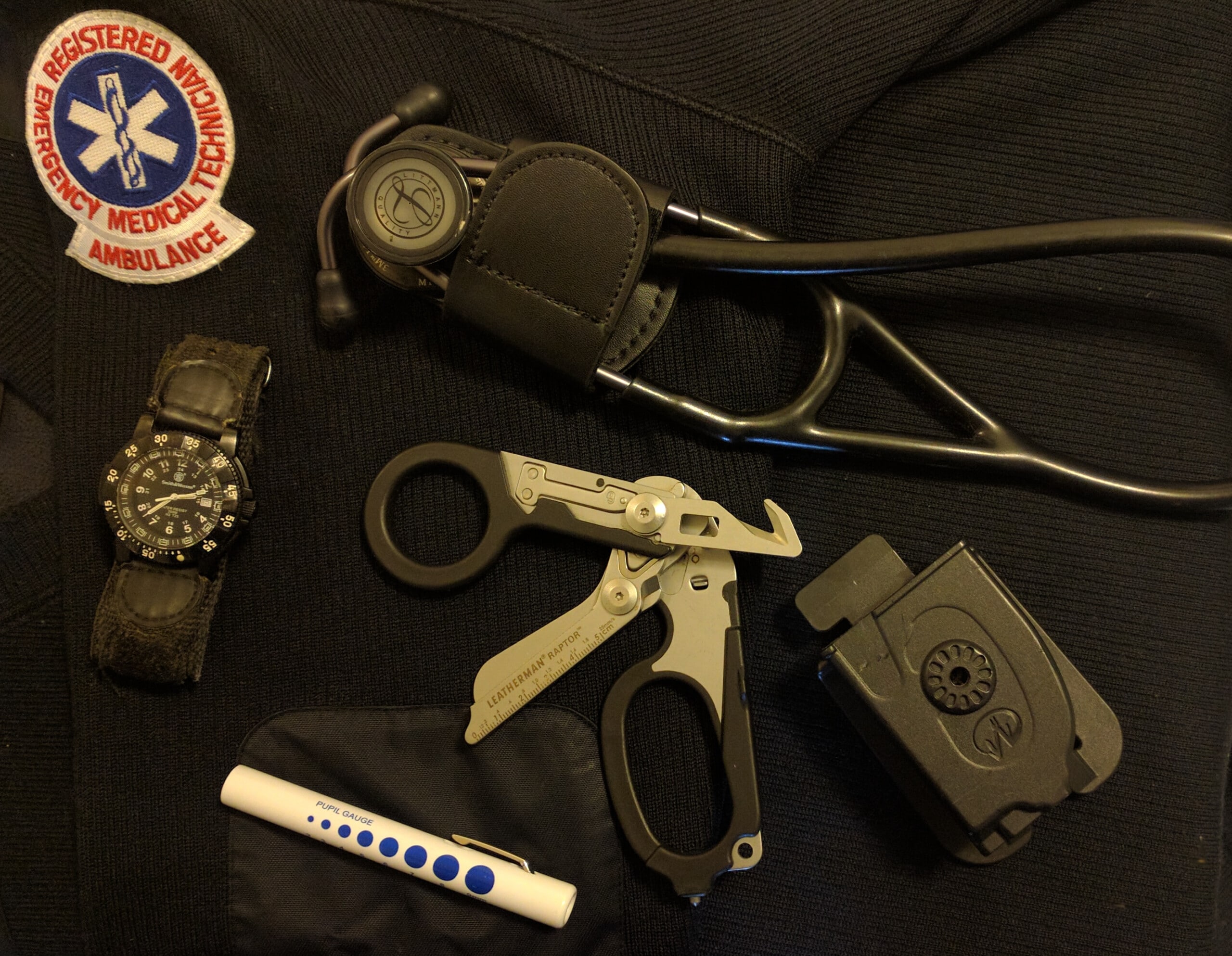
The name Leatherman is well-known for quality multitools. EMS providers have a need for specialized tools in their line of work, and the Leatherman Raptor fits this niche perfectly. With the Raptor you get 6 tools in one compact package that is easily accessible and fits into any first responder’s kit.
These medical shears are made from 420HC stainless steel — the same metal used in surgical scalpels — brought to a higher hardness than standard 420. This makes the blade very resistant to wear. According to Leatherman, these shears come with a 25-year manufacturer’s warranty.
The Leatherman Raptor is a dependable tool for first responders, EMTs, Paramedics, and even Military medical personnel.
Medical shears and scissors are some of the most-used tools in a first responder’s arsenal — for cutting tape and bandages, and for cutting through tough materials such as leather, jeans, and other fabrics.
Being made of 420HC stainless steel, the Raptor’s shears are well suited for cutting through a variety of materials without dulling. An issue with disposable shears is that you may go through multiple pairs on a single scene. Consider a motorcycle accident victim with multiple fractures who needs his leather suit cut off — disposable shears will dull and bend. The Raptor handles this with no difficulty and still retains sharpness.
As with any bladed implement, repeated use will eventually dull the blade and it will need sharpening. However, the Raptor retains a sharp edge far longer than disposable shears by virtue of its high-quality materials.
The strap cutter is one of the most useful additions to a tool designed with uniformed personnel in mind. From a firefighter cutting a seatbelt to a combat medic cutting the straps from a wounded soldier’s gear, the strap cutter is quick to access with the flick of a thumb and sharp enough to cut through most strap material quickly.
The strap cutter is designed to function without having to unfold the shear portion of the tool — it simply folds out with a simple thumb motion and is ready in an emergency.
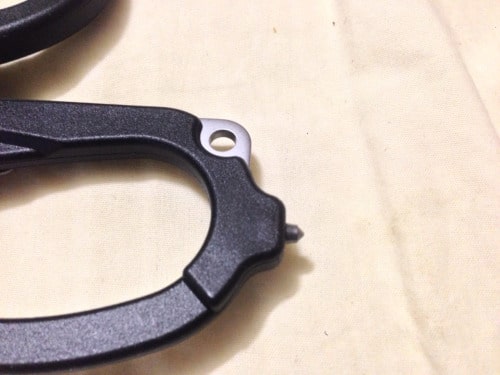
Located at the base of the shears, the ring cutter makes short work of most common rings. Degloving injuries and crush injuries are both common medical emergencies. If the patient is wearing a ring it will need to be removed to properly treat the wound. In cases of crush, degloving, or burn injuries with profound swelling, simply pulling the ring off could cause more damage. The ring cutter removes the obstruction safely.
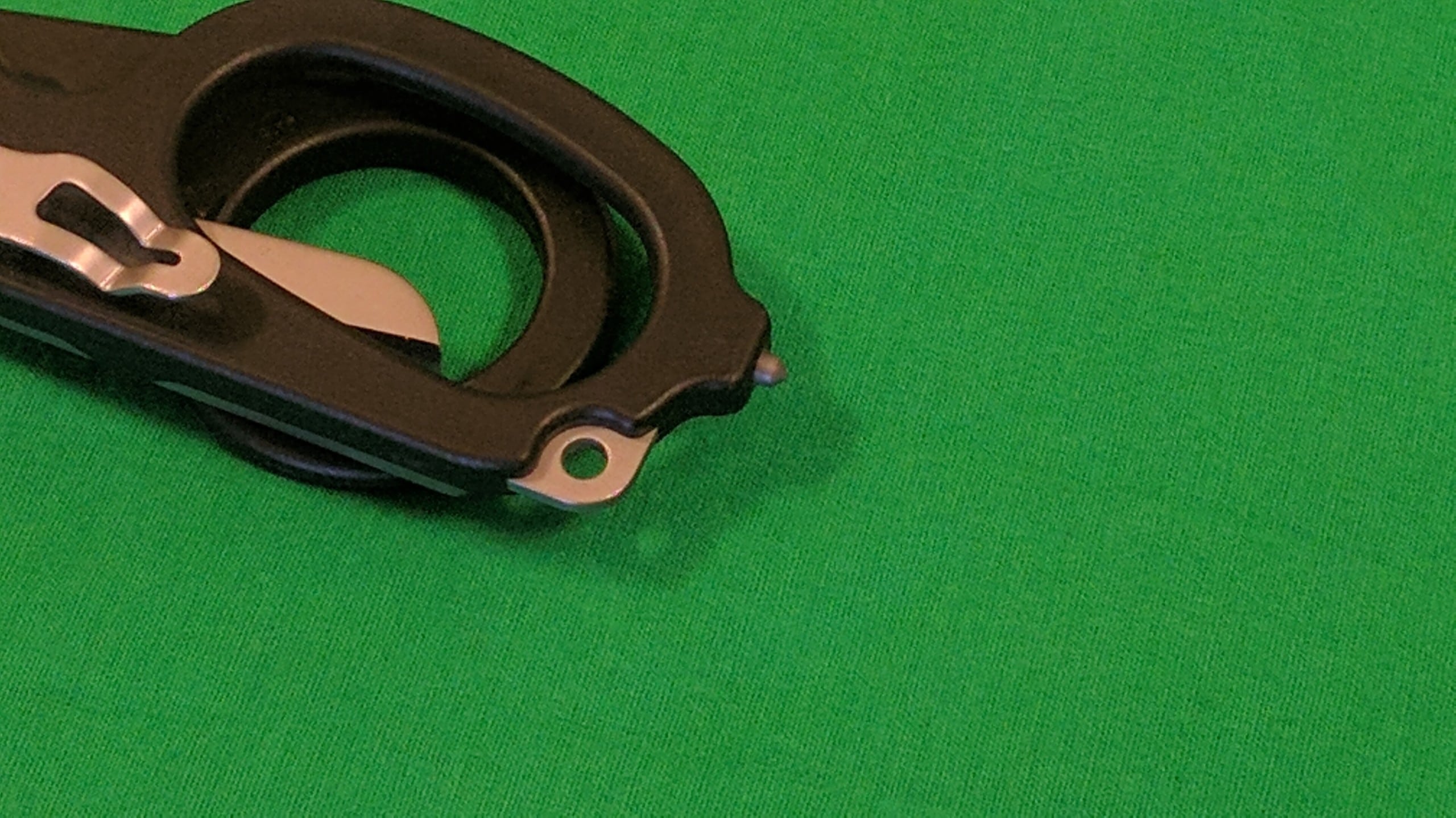
The Raptor features a tungsten carbide glass breaker — one of the hardest substances used in the industrial world. Tungsten Carbide is twice as stiff as steel and is used in cutting tools and armor-piercing rounds.
Car windows are made from tempered glass, which is designed to withstand weather and road debris. Tungsten carbide shatters tempered glass with little difficulty. The window breaker is located at the end of the handles and is accessible without opening the tool.
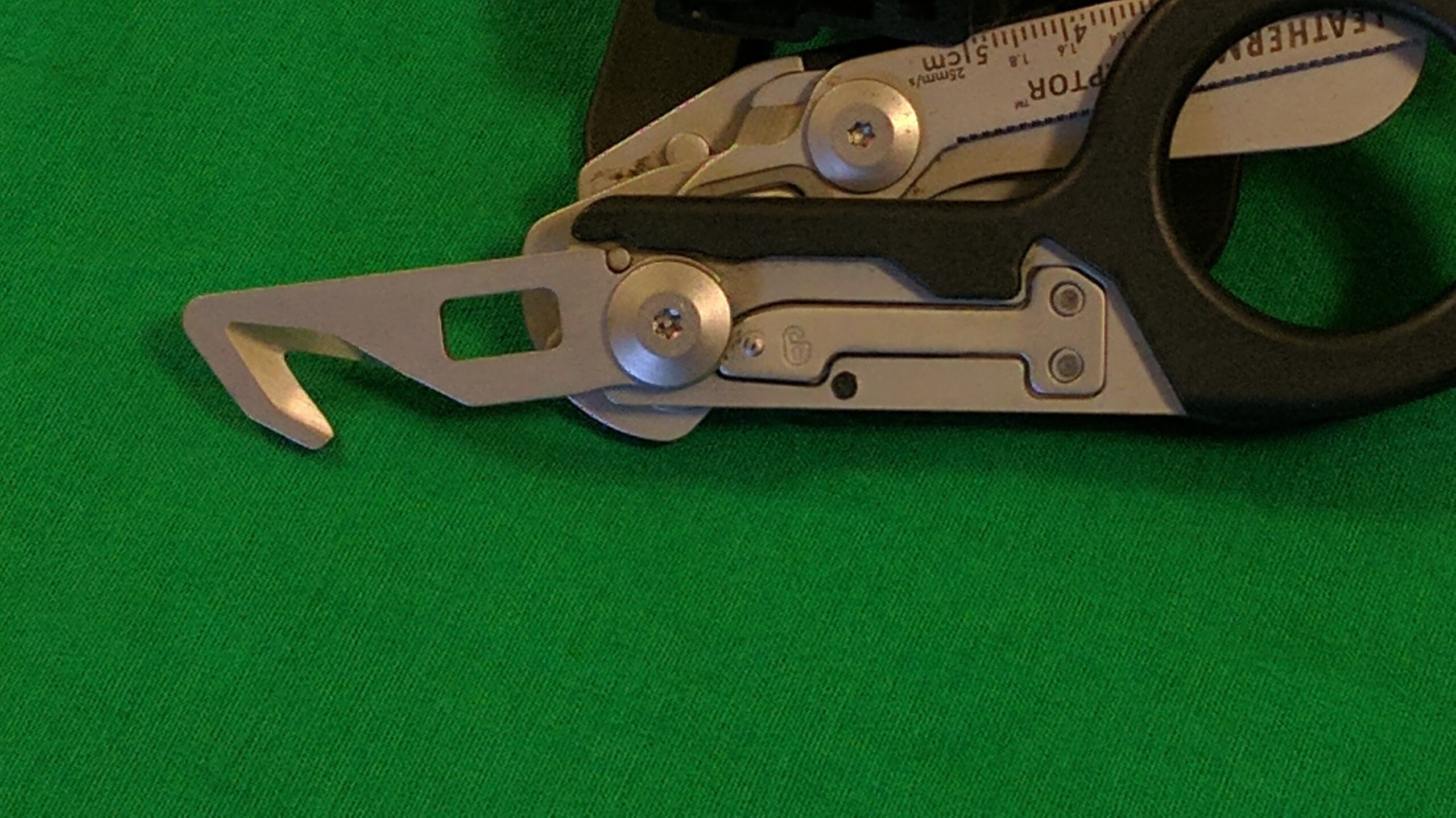
Administering oxygen is a daily occurrence in emergency response. Many ambulance companies keep plastic O2 wrenches, which can break or get lost. The Raptor has an O2 wrench built right into the seatbelt cutting tool, easily accessed with one-hand operation. The tool locks in place for a sturdy, reliable wrench.
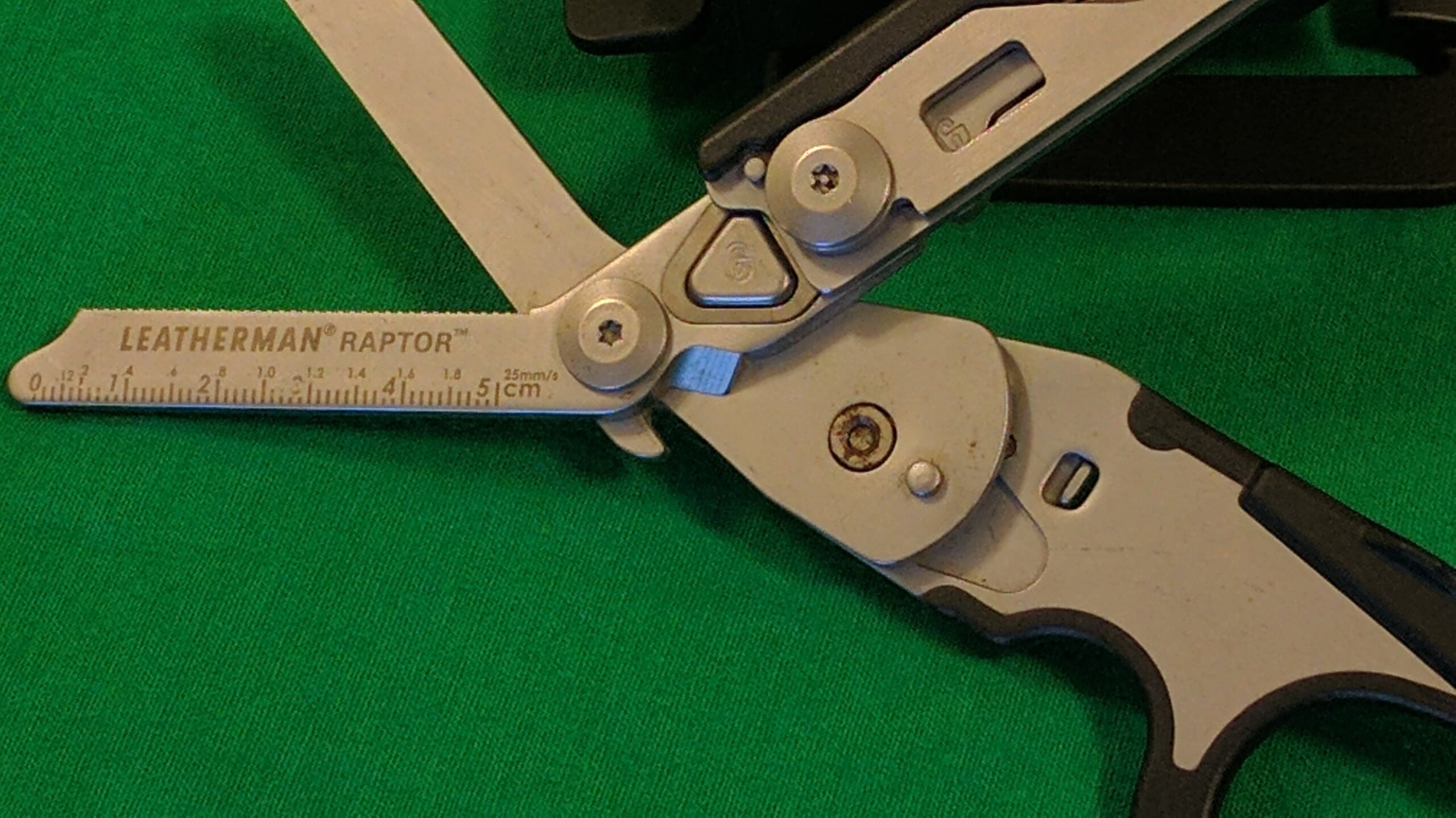
Part of an EMS worker’s job is documentation of injury. The 5 cm ruler built into the blade allows an EMT or Paramedic to measure wounds — lacerations, avulsions, gunshot wounds, punctures, and any other wound requiring documentation. It has markings for up to 25mm in length, located on the bottom blade in front of the ring cutter.
Pros
Cons
The Raptor’s greatest drawback is cleaning difficulty. Here’s how to maintain it:
Though made of stainless steel, 420HC has a higher carbon content and will eventually rust if over-exposed to moisture. Proper drying after cleaning is essential.
The Leatherman Raptor is the gold standard EMS rescue tool. I rate it at 4.5 out of 5. The only reason it doesn’t receive a perfect 5 is the difficulty in cleaning.
I have owned my Raptors for years, cut through countless materials, and they are still as sharp as ever. I would love to see Leatherman release a version that’s easier to disassemble for cleaning — but that is a minor criticism of an otherwise exceptional tool.
If you are an EMT, Paramedic, or first responder of any kind, the Raptor belongs in your kit. It is well worth the price. For more options, check out our best trauma shears guide, our EMT knife and multi-tool guide, and the complete new EMT gear roundup.
Yes. The Leatherman Raptor is the gold standard EMS rescue tool. It combines trauma shears, a strap cutter, ring cutter, O2 wrench, glass breaker, and ruler into one durable instrument with a 25-year warranty. Most EMTs who buy it keep it for years.
Rinse the pivot points under running water after exposure to bodily fluids or heavy debris. Allow to air dry completely before storing. Avoid harsh chemical soaks that may degrade the composite handle. Apply a light oil to pivot points periodically to maintain smooth operation.
Standard trauma shears only cut. The Leatherman Raptor adds five additional tools: a ring cutter, strap cutter, carbide glass breaker, O2 wrench, and metric/imperial ruler. It replaces multiple individual tools and folds to a compact size with a MOLLE-compatible holster.
Filed Under
About the Author
I'm a veteran EMT with 13+ years of field experience in EMS. I started EMT Training Station to help aspiring EMS professionals get the information they need — from training and certification to gear and career advancement. I've worked in Arizona and Michigan and participated in Hurricane Michael FEMA relief.
Learn how to become a flight paramedic. Read this step-by-step career roadmap covering clinical requirements, critical care certifications, and physical standards.
Compare the best trauma shears for EMTs and paramedics. Read reviews of the Leatherman Raptor, XShear, Fiskars Pro PowerArc, and standard disposable medical shears.
An in-depth review of the Armitron Sport Women's Digital Chronograph. A veteran EMT evaluates its compact resin protection, 100M water resistance, and budget shift value.