How to Become a Flight Paramedic: The Complete Career Track
Learn how to become a flight paramedic. Read this step-by-step career roadmap covering clinical requirements, critical care certifications, and physical standards.
· 8 min read
Read →
Updated for 2026
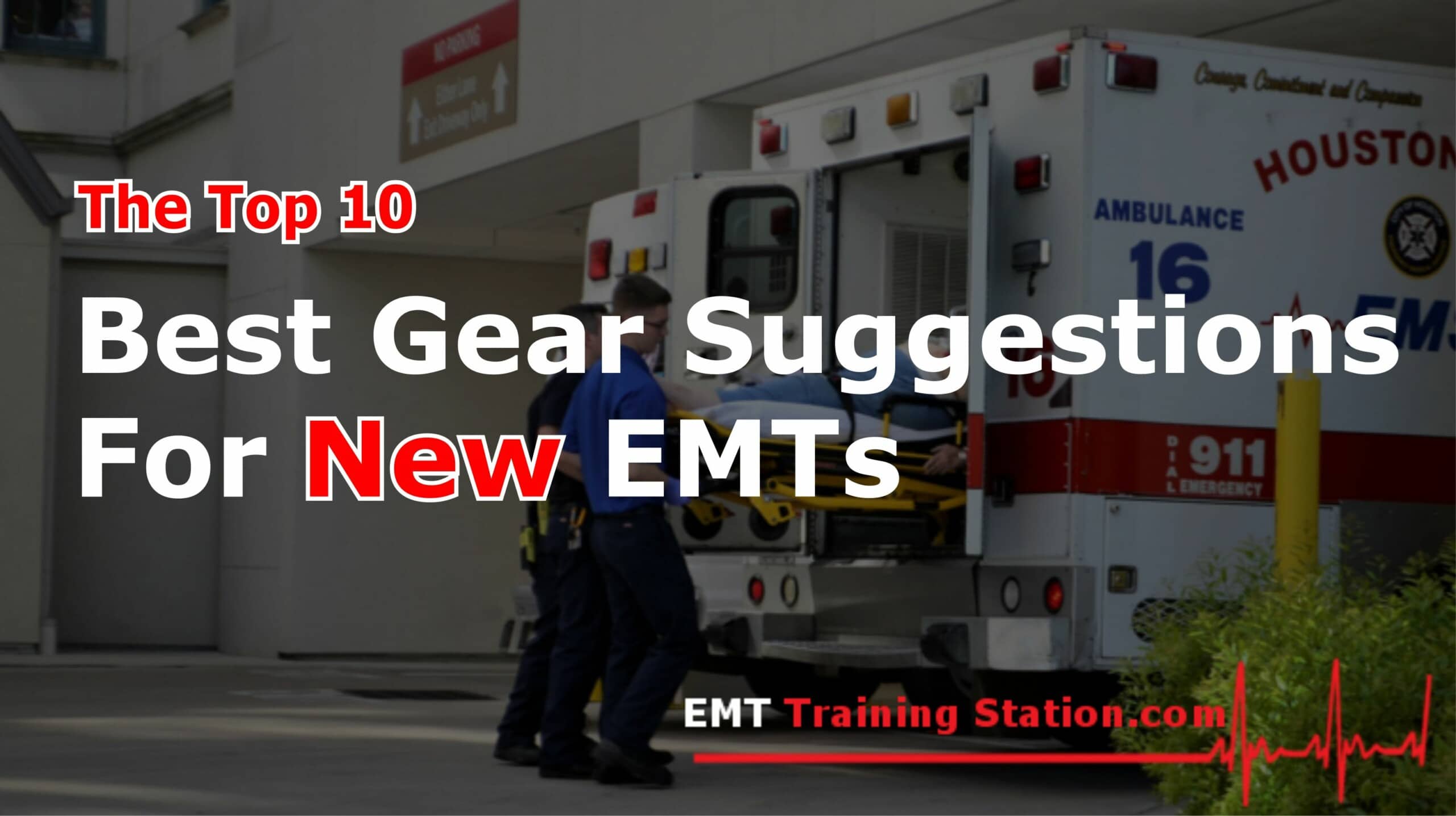
As a new EMT, one of the more daunting concerns is: What gear do I actually need? Being an emergency care provider requires specific tools for the field.
As a responder, it is your duty to have the correct personal equipment to make your job both safer and easier. Below is a list of recommended equipment to carry — from a provider with more than a decade in the field.
An EMT does not need to carry an entire jump bag on their belt, but having the right tools close at hand can make the difference on a critical call.
| Product | Best For | Price | ||
|---|---|---|---|---|
| 1 | | 5.11 A.T.A.C. Storm Boot | Best EMS boot for new EMTs | Check Price ↗ |
| 2 | | 3M Littmann Classic III Stethoscope | Best stethoscope for EMTs | Check Price ↗ |
| 3 | | LED Penlight with Pupil Gauge | Best EMT penlight | Check Price ↗ |
| 4 | | 5.11 TacLite EMS Pant | Best EMS pants for new EMTs | Check Price ↗ |
| 5 | | Leatherman Raptor EMS Multitool | Best EMS shears / multitool | Check Price ↗ |
| 6 | Rugged Cell Phone Case | Best protection for your phone | Check Price ↗ | |
| 7 | | Waterproof EMT Vital Notepads | Best all-weather notepad | Check Price ↗ |
| 8 | | Bulk Pens (12-pack) | Best budget pens for EMS | Check Price ↗ |
| 9 | | Moisture-Wicking Base Layer | Best climate base layer | Check Price ↗ |
| 10 | | Casio Digital Watch | Best budget EMT watch | Check Price ↗ |
Think about how much time you will be spending on your feet. A good pair of EMT tactical boots are going to be your best friend.
When selecting a pair, the most important factors are comfort, support, and waterproofing. Look for boots with Gore-TEX — a material that is both waterproof and breathable, which eliminates foot odor and keeps feet dry in rain and snow.
I recommend a full boot that rises above the ankle for better support. Quality boots typically cost around $150 or more. Recommended brands: Magnum, Rocky, 5.11, Danner.
My recommendation: 5.11 A.T.A.C. Storm Boots have been my go-to boot for over 10 years. Waterproof, comfortable, short break-in period, side zipper, anti-bloodborne pathogen coating, and slip-resistant. They typically last 2–3 years working 48-hour weeks.
For more options: see our complete Best EMS Boots guide.
A good stethoscope is a staple of EMS. Most companies will provide one, but these are usually the cheapest quality available. Investing in your own scope allows for accurate lung sound assessment and blood pressure auscultation.
For new EMTs, you need to know lung sounds. They can tell you whether a patient is having an asthma attack versus a COPD exacerbation. See 8 Lung Sounds Every EMT Should Know.
My recommendation: 3M Littmann Classic III. Littmann is the industry standard, used by paramedics, RNs, and physicians worldwide. Excellent acoustic quality, adult and pediatric sides, and a dual-lumen tube for ambulance use.
For more options: see our Best Stethoscopes for EMTs guide.
Penlights are essential to professional EMT assessment. Pupil response gives critical clues to patient condition:
Most run reports now require a documented pupil size. Quality penlights include a pupil gauge on the side for quick measurement.
My recommendation: This LED penlight includes a pupil gauge, a 5cm ruler, is durable, and has a long-lasting LED. Penlights are also inexpensive — buy several, as they have a way of disappearing from rigs.
EMT trauma pants are another essential consideration. Know what color your school or employer requires (typically black or navy blue). A good pair needs to be durable with EMT-specific pocket storage for shears, penlights, stethoscopes, gloves, and other tools.
These typically cost around $50. Many EMS companies include a uniform allowance that will reimburse this cost once you’re hired — but you’ll need a pair for EMT school.
My recommendation: 5.11 TacLite EMS Pant. Reasonably priced, durable, and purpose-built for EMS work with thigh and calf storage pockets. Available in dark blue and black. Breathable — important on summer shifts.
For more options: see our Best EMS Pants guide.
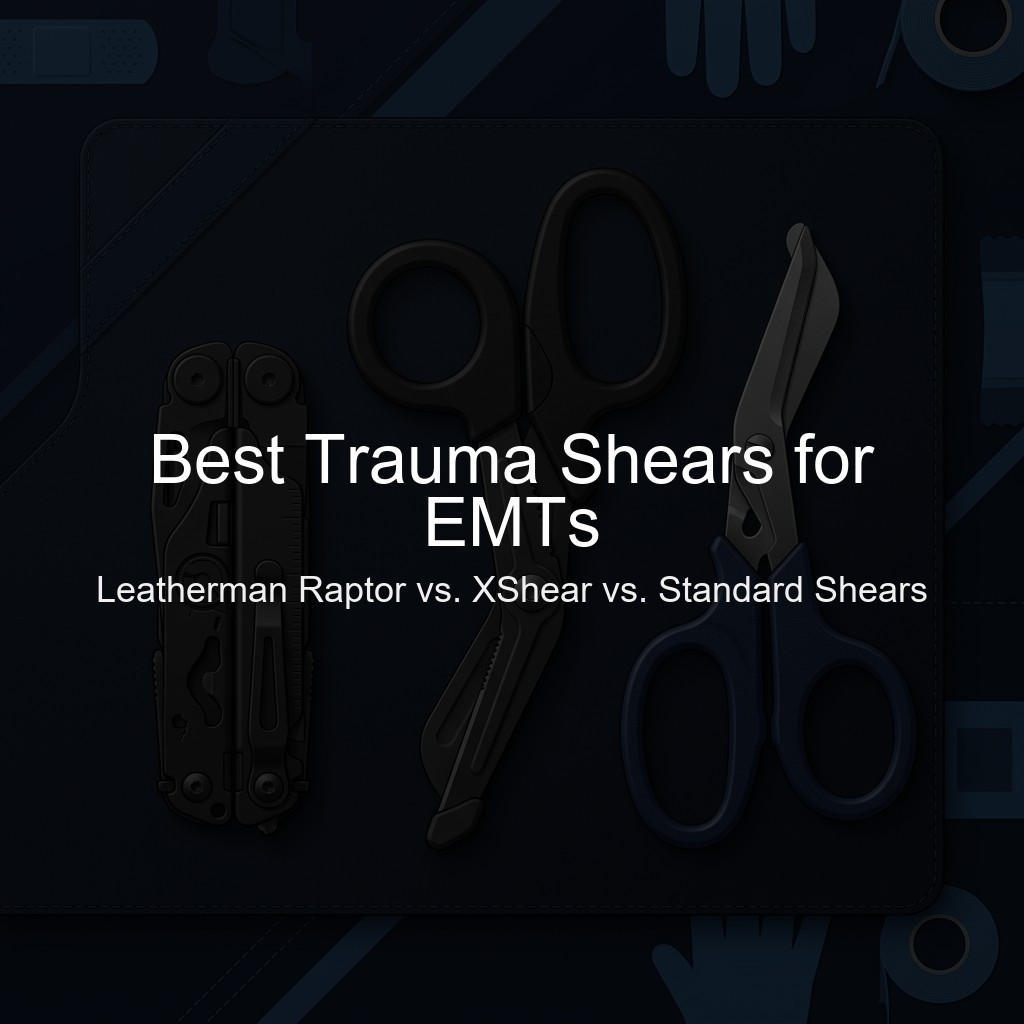
Trauma shears are special scissors designed to cut quickly through clothing, leather, and seatbelts. For a complete comparison of the top choices on the market, check out our best trauma shears guide. Every agency provides them — but they’re usually the cheapest quality and they disappear.
Shears range from under $5 to $100 for the Leatherman Raptor.
My recommendation: Leatherman Raptor EMS Multitool. Yes, it’s the most expensive option — but it’s not just shears. The Raptor is a 6-in-1 EMS multitool:
For a full review: Leatherman Raptor Review.
A smartphone is essential for an EMT. It provides a direct line to dispatch, GPS navigation, access to medical reference apps, and documentation tools. Since EMTs work in high-risk physical environments, a rugged protective case with tempered glass screen protection is a must.
All-weather notepads are essential for recording vitals, scene notes, and other information that gets transferred to your run report.
While standard notepads work, waterproof notepads survive rain, blood, and other fluids that inevitably end up on field equipment. They come 3-pack with pens and 140 waterproof pages per pad.
Make sure whatever you choose fits in your cargo pocket.
This sounds obvious but carry extra pens and give them away freely. Patients will often need to sign forms. Leave a pen when nurses use yours.
Building rapport with ER nursing staff is one of the most underrated skills in EMS. A nurse who likes you will come meet you at the door for a handoff report. One who doesn’t will make you wait with your patient until they’re ready.
Buy a bulk pack — they’re cheap and the goodwill is worth it.
What do EMTs have in common with mail carriers? Rain, sleet, or snow — patients need transport, so off you go.
EMTs operate in all weather conditions. Have moisture-wicking base layers for summer heat and thermal underlayers for winter. Most EMT uniforms are not breathable, so base layer choices matter significantly.
In difficult rescues — like a vehicle extrication with an entrapped patient — you may be standing outside in harsh weather providing care for 30+ minutes. The right clothing makes that survivable.
Do not spend a lot of money on a work watch. Watches get broken in EMS — it is a certainty. Focus on a durable, affordable watch with a second hand or digital seconds for accurate vital signs.
A $10–15 watch that reliably shows seconds is more valuable on a call than an expensive smartwatch that might break.
My recommendation: This Casio — cheap, waterproof, digital seconds, and replaceable.
For more options: see our Best EMT Watches guide.
This gear will serve you through EMT school and your first years in the field. You don’t need to buy everything at once — prioritize:
Everything else can be acquired over time. Welcome to EMS.
New EMTs need at minimum good EMS boots, a quality stethoscope, trauma pants, a penlight, and trauma shears. These are the items you will use on every single shift. Everything else can be acquired as you get more experience in the field.
A solid starter kit including boots, stethoscope, pants, and small tools typically runs $300–$500. You can reduce this by prioritizing the most essential items first and adding gear over time as your budget allows.
Most EMT programs require students to arrive with their own stethoscope and blood pressure cuff for the skills lab. Boots and uniform pants are typically required before clinical rotations begin. Check with your specific program for their exact gear requirements.
About the Author
I'm a veteran EMT with 13+ years of field experience in EMS. I started EMT Training Station to help aspiring EMS professionals get the information they need — from training and certification to gear and career advancement. I've worked in Arizona and Michigan and participated in Hurricane Michael FEMA relief.
Learn how to become a flight paramedic. Read this step-by-step career roadmap covering clinical requirements, critical care certifications, and physical standards.
Compare the best trauma shears for EMTs and paramedics. Read reviews of the Leatherman Raptor, XShear, Fiskars Pro PowerArc, and standard disposable medical shears.
An in-depth review of the Armitron Sport Women's Digital Chronograph. A veteran EMT evaluates its compact resin protection, 100M water resistance, and budget shift value.