How to Become a Flight Paramedic: The Complete Career Track
Learn how to become a flight paramedic. Read this step-by-step career roadmap covering clinical requirements, critical care certifications, and physical standards.
· 8 min read
Read →
Here is a list of our choices for the best-assembled trauma kits. We go into further detail on each of these products below.
| Product | Best For | Price | ||
|---|---|---|---|---|
| 1 | | Lightning X Jumbo O2 Medic Bag | Professional / ambulance-level responders | Check Price ↗ |
| 2 | | Lightning X Premium Tactical Backpack | Tactical medics and event EMS | Check Price ↗ |
| 3 | 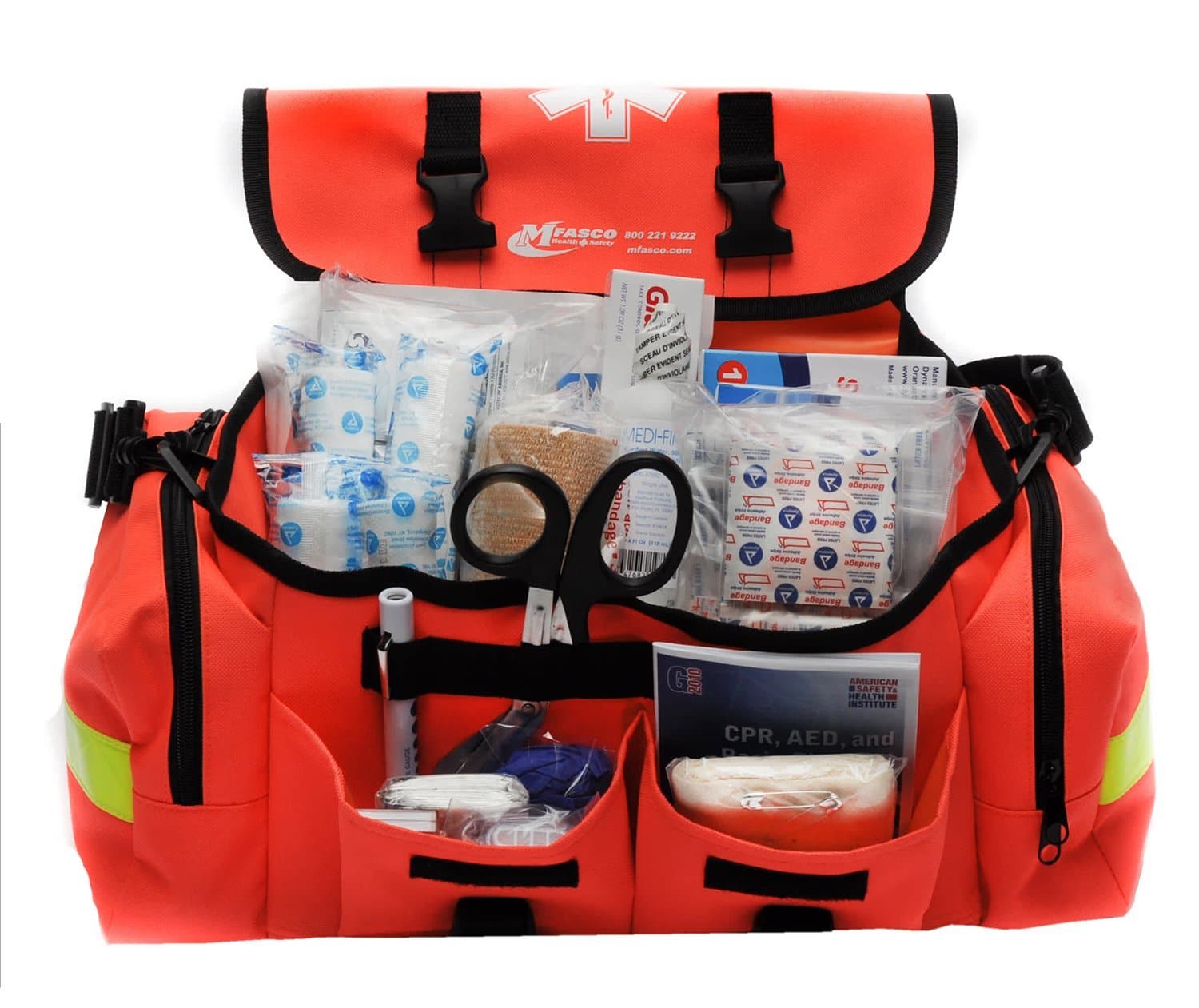 | MFASCO Complete Emergency Response Bag | General-purpose home/vehicle kit | Check Price ↗ |
| 4 | | Adventure Medical Trauma Pak + QuikClot | Bleeding control addon to any kit | Check Price ↗ |
| 5 | | Delta Provision Tactical Trauma Tool Kit | MOLLE-compatible tourniquet/bleed kit | Check Price ↗ |
| 6 | | RESCUE ESSENTIALS Rip-Away Lite Operator | Tactical/MOLLE compact operator kit | Check Price ↗ |
| 7 | | Lightning X Small EMT EMS Trauma Bag | Volunteer EMT / personal vehicle kit | Check Price ↗ |
| 8 | | Rescue Essentials Outdoor Range Medical Kit | Hunters, hikers, range safety officers | Check Price ↗ |
| 9 | | Active Shooter Casualty Response Kit | Mass casualty / active shooter response | Check Price ↗ |
| 10 | | Adventure Medical Kits Grizzly | Civilian / sportsman baseline kit | Check Price ↗ |
As an EMT student or working provider, you might want to consider owning your own jump bag. A jump bag — also known as a trauma bag or EMT bag — is exactly what it sounds like: a bag or pouch containing equipment used to treat traumatic injuries.
This is required equipment on an ambulance and typically contains items needed to stabilize a patient until the crew can load them and continue treatment. Being a skilled provider, having your own kit is a smart idea.
Freelance and contract medics — Some EMTs and Paramedics work as private contractors providing medical coverage in industries like film production. A set medic is responsible for emergency response until 911 arrives. In these cases, the responder is responsible for stocking their own professional-level bag.
Vehicle emergency preparedness — Keeping a kit in your car means you’re prepared when you encounter an accident. It doesn’t need to be a full professional kit — something beyond a standard first aid kit is worthwhile.
Outdoor adventures — As a trained EMT, you will be the go-to person if someone is injured on a camping or hiking trip. A portable kit that fits in a backpack and can treat most injuries is ideal.
While you can assemble your own jump bag, purchasing a pre-assembled kit is often more convenient and cost-effective.
These kits should be considered based on your specific need:
Always consult your local and state laws regarding what you are permitted to carry and administer. Refer to your jurisdiction’s Good Samaritan law for civilian responder protection.
The Lightning X Jumbo O2 Medic Bag is the closest thing to carrying an ambulance on your shoulder. This professional-level trauma bag contains everything a responder needs to render basic care and aid in both medical and traumatic emergencies — and it’s on par with jump bags found on actual ambulances.
This is a large bag that includes an empty O2 D tank. It’s ideal for volunteer EMTs and firefighters who respond in personal vehicles, and perfect for independent contractors like movie set medics who must furnish their own professional-level kit.
Features durable nylon construction with a reinforced water-resistant bottom, reflective safety strips, an embroidered star of life logo, and a shoulder strap for portability.
Pros
Cons
The Lightning X Tactical EMS Backpack was designed with the tactical medic in mind — one who supports law enforcement entities like SWAT teams where situations can develop rapidly.
The included hydration bladder means the rescuer stays hydrated during extended standby scenarios. Two small and two large grab-n-go pouches with transparent windows plus two foam-lined organizers with six dividers are all removable and interchangeable within the main compartment.
It’s also excellent for non-tactical medics working large events (sports venues, concerts) who need a portable, organized trauma bag.
Pros
Cons
The MFASCO Complete Emergency Response Bag is a great general-purpose EMT bag. It contains the supplies needed to handle most common injuries and represents a solid general trauma kit.
This kit is ideal for keeping at home, in a car, or taking on vacation. It stores easily in vehicles or closets and is clearly identifiable as an EMT bag with reflective strips for nighttime visibility. Note: this is a basic care kit and is not the right choice for providers needing professional-level equipment outside an agency setting.
Pros
Cons
The Adventure Medical Kits Trauma Pak does one thing: it stops bleeds. This is not for minor lacerations — it is purposely assembled to stop heavy traumatic hemorrhage.
QuikClot was developed for combat medics to stop bleeding from combat wounds. It works by absorbing water and blood rapidly, forming a clot at the injury site.
Given that approximately 30% of all trauma-related deaths result from hypovolemic shock (blood loss), this kit is arguably the most important addition to any home or vehicle — with or without a complete first aid bag.
Contents: 1 QuikClot Sponge, 1 Trauma Pad (5”×8”), 1 Pair Nitrile Gloves, Duct Tape, 1 Triangular Bandage, 1 Gauze Pad (4”×4”), 1 Gauze Pad (2”×2”), 1 Conforming Gauze (3”), Antiseptic Wipes, 1 Resealable Bio-Hazard Bag
Pros
Cons
The Delta Provision Tactical Trauma Kit provides fast access to a tourniquet, splint, and Israeli compression bandage in a fold-out MOLLE-compatible pouch.
This is a specialized toolset, not a complete trauma kit. It’s a perfect addition to any backpack or vest with MOLLE webbing — hikers, hunters, and tactical paramedics supporting law enforcement all benefit from having fast-access bleed control and fracture management on their person.
Pros
Cons
The RESCUE ESSENTIALS Rip-Away Lite Operator Kit is a compact trauma kit designed to treat and stabilize one patient in penetrating trauma scenarios — bleeds and airway emergencies.
Contents:
Pouch dimensions: 6¼” × 4½” × 4½”. Weight: 1 lb 5 oz. MOLLE compatible.
Pros
Cons
The Lightning X Small EMT Trauma Bag closely mirrors the type of jump bag found on an ambulance — in a smaller footprint suited for a personal vehicle or home storage.
This kit is ideal for private contractors, volunteer EMTs, and first responders who want a complete trauma bag outside of their agency. Available in multiple colors with a shoulder strap, reflective strips, embroidered logos, and interior compartments for organized storage.
Full contents: Tweezers, Kelly Hemostats, Trauma Shears, Bandage Shears, Penlight, Ammonia Ampules (10), Band-Aids (100), 4”×4” Gauze Pads (50), Roll Gauze (2”, 3”, 4”), Self-Adherent Bandage, Elastic Ace Bandage, ABD Pads, Cloth Tape, Iodine Wipes, Alcohol Wipes, Antibiotic Ointment, Instant Cold Packs (2), Eye Pads, Triangular Bandages, Eye Wash, Exam Gloves, SAM Finger Splint, Oral Glucose Gel, Adult BP Cuff with case, Stethoscope, CPR Mask, Oropharyngeal Airway Kit (6), Petroleum Gauze, First Aid Guide, and more.
Pros
Cons
The Rescue Essentials Outdoor Range Kit is compact, portable, and MOLLE compatible — designed for quick access in traumatic emergencies. Its small footprint stores easily in a vehicle, boat, or RV. The windlass tourniquet, hemostatic gauze, chest seal, and NPA (nasopharyngeal airway) make it a genuine trauma responder kit, not a basic first aid box.
Includes a Tactical Combat Casualty Care reference card. Removable shoulder strap and two-position handle.
Key Supplies: Windlass tourniquet, hemostatic gauze (Z-fold), chest seal, NPA (28Fr), face mask, EMT shears, silver survival wrap, triangular bandage, combat casualty cards, adhesive tape, elastic bandage, nitrile gloves, eye shield, and more. Weight: 3 lbs 1 oz.
Pros
Cons
The Active Shooter Casualty Response Kit by Rescue Essentials is designed for rapid care of multiple shooting victims. It’s an unfortunate reality that this kit category exists, but for on-duty responders called to mass casualty events, it is essential.
Contents:
Pros
Cons
The Adventure Medical Kits Grizzly is the baseline for a complete civilian injury solution. While not a professional kit, it is the perfect step above a typical first aid kit for sportsmen and outdoor enthusiasts.
What separates it from a standard first aid kit: a complete bleeding control solution with tourniquet and QuikClot bandages, a comprehensive wilderness medicine guide, and a roll splint. It was designed for people who spend extended time in the backcountry — hunters, hikers, and campers.
Contains over 80 items including a SWAT-T tourniquet, QuikClot Sport, trauma pads, gauze, conforming bandages, CPR face shield, EMT shears, irrigation syringe, medications (ibuprofen, antihistamine, aspirin, antidiarrheal), moleskin, C-splint, and more.
Pros
Cons
As a trained provider, EMTs and Paramedics will encounter injuries outside of their jobs. While not legally required to act, most of us got into this field to help people. If you choose to keep a fully stocked trauma kit, keep these points in mind:
A complete EMT trauma bag should include airway management supplies (BVM, NPA, OPA), bleeding control (tourniquets, hemostatic gauze, pressure bandages), C-spine supplies, oxygen delivery equipment, trauma shears, gloves, and a BP cuff with stethoscope. The exact contents depend on your scope of practice and setting.
Agency-issued equipment is provided on the ambulance, but many EMTs carry a personal jump bag for off-duty emergencies, volunteer responses, or specialized roles. A personal bag is also useful during wildland, tactical, or wilderness operations where ambulance access is limited.
The Lightning X Jumbo O2 Medic Bag is the best option for EMTs who want an ambulance-level kit. For a compact personal option, the RESCUE ESSENTIALS Rip-Away Lite Operator Kit covers penetrating trauma in a small, affordable package.
About the Author
I'm a veteran EMT with 13+ years of field experience in EMS. I started EMT Training Station to help aspiring EMS professionals get the information they need — from training and certification to gear and career advancement. I've worked in Arizona and Michigan and participated in Hurricane Michael FEMA relief.
Learn how to become a flight paramedic. Read this step-by-step career roadmap covering clinical requirements, critical care certifications, and physical standards.
Compare the best trauma shears for EMTs and paramedics. Read reviews of the Leatherman Raptor, XShear, Fiskars Pro PowerArc, and standard disposable medical shears.
An in-depth review of the Armitron Sport Women's Digital Chronograph. A veteran EMT evaluates its compact resin protection, 100M water resistance, and budget shift value.