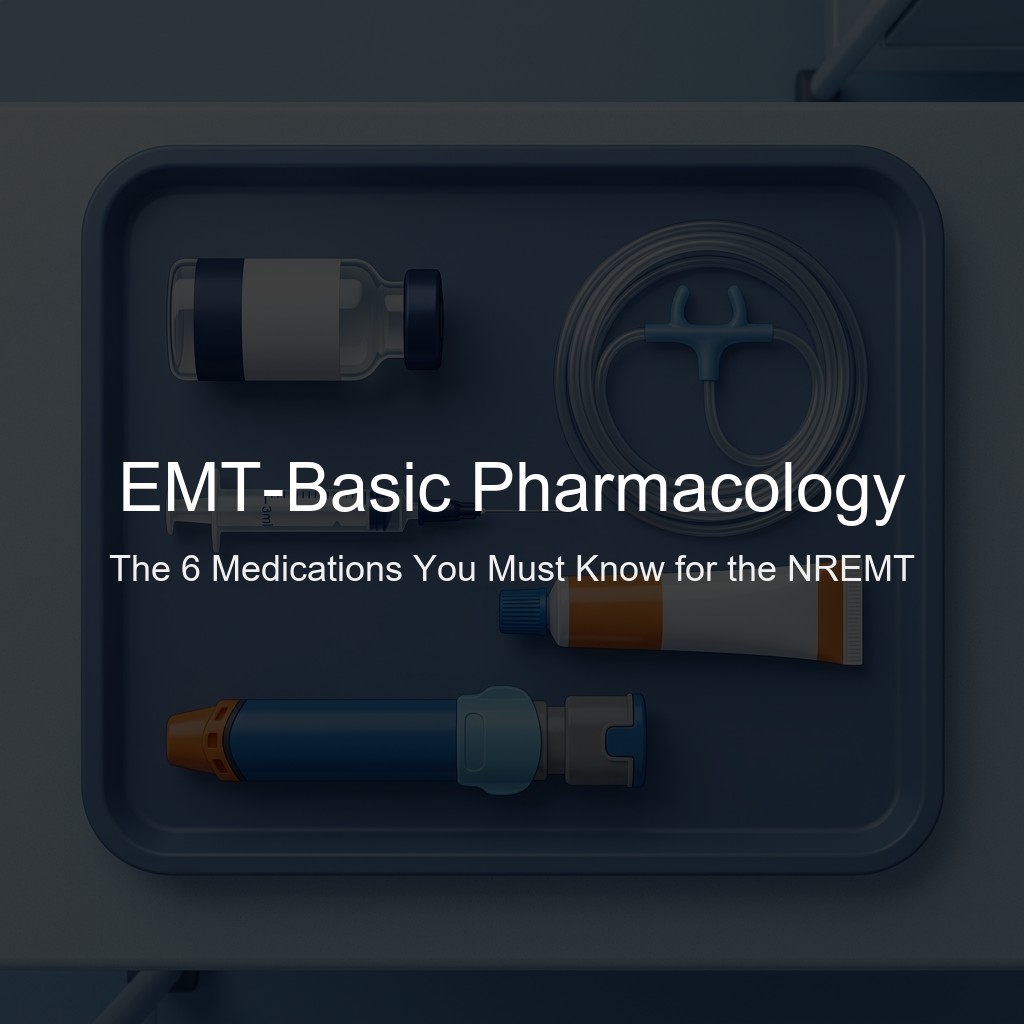
EMT-Basic Pharmacology: 6 Meds for the NREMT

Master the 6 core medications an EMT-Basic can administer or assist with. Study standard dosages, indications, and contraindications for the NREMT exam.
EMT-Basic Pharmacology: 6 Meds for the NREMT
Table of Contents

Pharmacology represents one of the most heavily tested subjects on the cognitive portion of the National Registry of Emergency Medical Technicians (NREMT) exam. For EMT-Basic candidates, the challenge is not memorizing hundreds of drugs. Instead, it is masterfully understanding the narrow list of medications you are authorized to administer or assist with in the field.

To pass your cognitive exam and safely practice in the field, you must master the indications, contraindications, dosages, and administration routes for these core substances.


The 6 Core EMT-Basic Medications

The following table provides a quick-reference guide to the primary medications you will use as an EMT-Basic. Study this grid carefully before reading the detailed breakdowns below.

MedicationMain IndicationMajor ContraindicationsStandard Dose & Route
OxygenHypoxia (SpO2 < 94%), dyspnea, or hypoperfusionNone in emergency settings (target appropriate SpO2)1 to 6 LPM via Nasal Cannula; 10 to 15 LPM via Non-Rebreather Mask (NRB)
Oral GlucoseHypoglycemia (conscious patient with history of diabetes)Unconsciousness, inability to swallow or protect airway1 full tube (approx. 15 to 25 grams) buccal (between cheek and gum)
Activated CharcoalRecently ingested poisons (within 1 hour)Altered mental status, ingestion of corrosives, inability to swallow1 to 2 grams per kilogram of body weight (typically 25 to 50 grams adult) oral
Aspirin (ASA)Chest pain suggestive of cardiac origin (MI)Active bleeding, hypersensitivity (allergy), bleeding disorders162 mg to 324 mg (two to four 81 mg baby aspirin) chewed and swallowed
Epinephrine Auto-InjectorAnaphylaxis with respiratory distress or shockNone in a life-threatening emergency0.3 mg (adult) or 0.15 mg (pediatric) intramuscular (IM) in lateral thigh
Nitroglycerin (NTG)Chest pain of cardiac origin (angina, MI)Systolic BP < 100 mmHg, head injury, ED medications (PDE-5 inhibitors)0.4 mg tablet or spray sublingual (under the tongue); max 3 doses

Detailed Medication Profiles

1. Oxygen (O2)

Oxygen is the most common drug administered in prehospital care. However, modern emergency protocols caution against routine administration.

  • Mechanism of Action: Increases arterial oxygen tension and improves tissue oxygenation.
  • Indications:
    • Signs of respiratory distress (nasal flaring, accessory muscle use).
    • Hypoxemia (measured oxygen saturation below 94% on room air).
    • Signs of shock, systemic hypoperfusion, or carbon monoxide poisoning.
  • Contraindications: There are no absolute contraindications in emergency settings. You must, however, avoid hyperoxia (excessive oxygenation), which can cause coronary artery vasoconstriction and increase harmful free radicals.
  • Dosing and Administration:
    • Nasal Cannula: 1 to 6 LPM for mild hypoxia (delivers 24% to 44% oxygen concentration).
    • Non-Rebreather Mask (NRB): 10 to 15 LPM for severe hypoxia or shock (delivers up to 90% oxygen concentration).
    • Bag-Valve Mask (BVM): 15 LPM linked to oxygen reservoir for patients in respiratory failure or arrest.

2. Oral Glucose

Oral glucose is a simple sugar gel designed for rapid absorption through the mucous membranes of the mouth.

  • Mechanism of Action: Directly increases blood glucose levels, restoring cellular energy production in the brain.
  • Indications: Conscious patients with altered mental status and a documented history of diabetes, or a confirmed blood glucose level below 60 mg/dL.
  • Contraindications:
    • Altered mental status to the point where the patient cannot protect their own airway.
    • Inability to swallow or follow commands.
  • Dosing and Administration: One full tube (typically 15 to 25 grams of glucose paste) applied buccally. Place the gel on a tongue depressor and rub it against the mucosal lining between the cheek and the gums.

3. Activated Charcoal

Activated charcoal is a black suspension that binds to toxins in the gastrointestinal tract, preventing their absorption into the bloodstream.

  • Mechanism of Action: Adsorbs toxic substances through chemical binding.
  • Indications: Recent ingestion of certain poisons (usually within one hour of ingestion) under direct guidance from online medical direction or poison control.
  • Contraindications:
    • Ingestion of corrosives (alkalis or strong acids), petroleum distillates, or heavy metals.
    • Altered mental status or inability to swallow (extreme risk of aspiration).
  • Dosing and Administration: 1 to 2 grams per kilogram of body weight. The average adult dose is 25 to 50 grams, while pediatric doses are 12.5 to 25 grams. Administer orally, often in a covered cup with a straw to help the patient drink the chalky mixture.

4. Aspirin (ASA)

Aspirin is an antiplatelet medication that prevents platelets from clumping together to form blood clots. It is not administered to reduce pain in the emergency setting.

  • Mechanism of Action: Inhibits platelet aggregation, preventing an existing coronary artery clot from growing larger.
  • Indications: Chest pain, pressure, or discomfort suggestive of an acute coronary syndrome (such as an active myocardial infarction).
  • Contraindications:
    • Hypersensitivity to aspirin or NSAIDs.
    • Active gastrointestinal bleeding or bleeding disorders.
    • Inability to swallow.
  • Dosing and Administration: 162 mg to 324 mg administered orally. The patient must chew the baby aspirin tablets before swallowing to speed absorption through the oral mucosa.

5. Epinephrine Auto-Injector

Epinephrine is a naturally occurring hormone that acts on both alpha and beta-adrenergic receptors to combat severe allergic reactions.
  • Mechanism of Action:
    • Alpha-1 stimulation: Vasoconstricts blood vessels to raise blood pressure and reduce swelling.
    • Beta-2 stimulation: Bronchodilates airway passages to improve respiration.
  • Indications: Anaphylaxis presenting with signs of respiratory distress (wheezing, stridor) or hypoperfusion (shock, low blood pressure).
  • Contraindications: None when used to treat a life-threatening emergency.
  • Dosing and Administration:
    • Adult: 0.3 mg administered intramuscularly (IM).
    • Pediatric: 0.15 mg administered intramuscularly (IM).
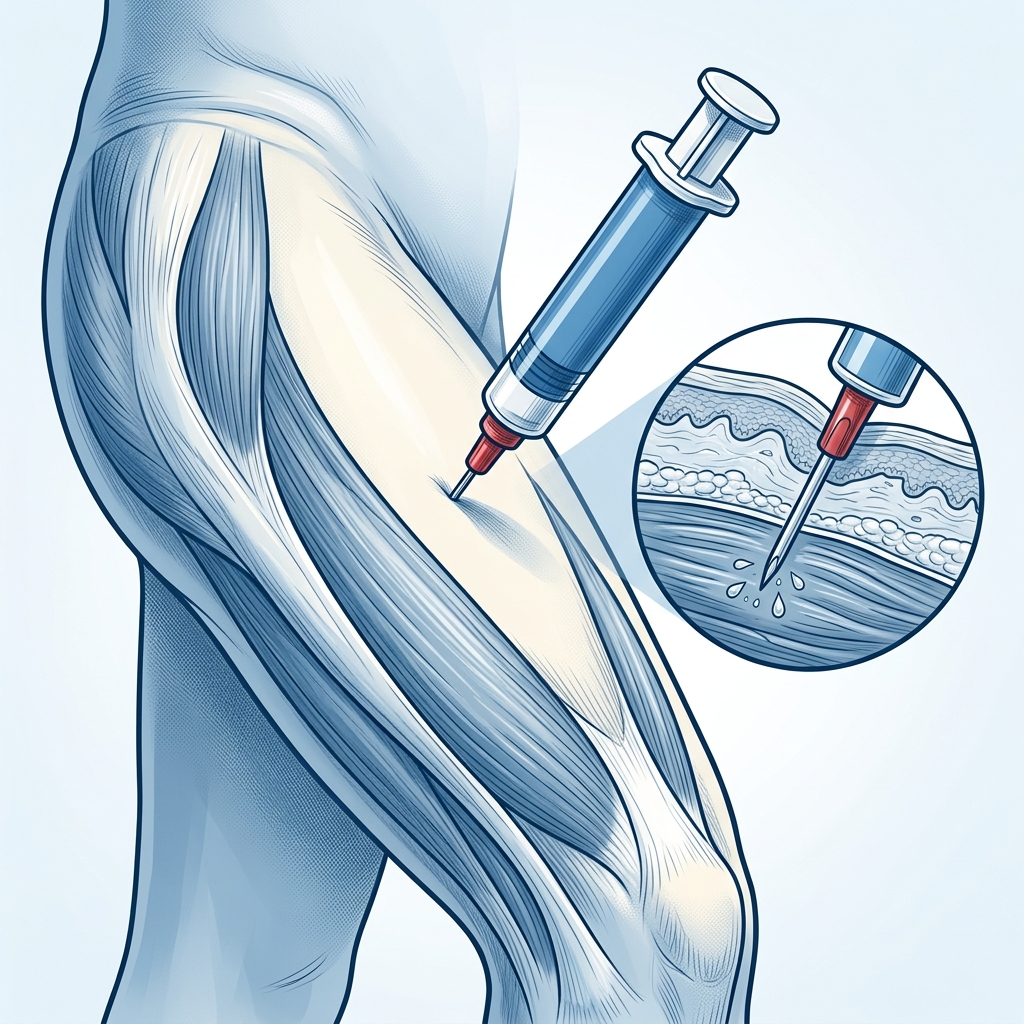
    • Route: Inject directly into the anterolateral aspect of the thigh, holding the device in place for 3 to 10 seconds (depending on the auto-injector model) to ensure complete delivery.

Medical illustration showing the correct administration route and site for an epinephrine auto-injector on the lateral thigh


6. Nitroglycerin (NTG)

Nitroglycerin is a potent vasodilator used to relieve cardiac chest pain.

  • Mechanism of Action: Dilates coronary arteries and systemic veins, reducing preload and afterload on the heart, which lowers myocardial oxygen demand.
  • Indications: Chest pain of cardiac origin (ischemic origin) where the patient has a current prescription for the drug.
  • Contraindications:
    • Systolic blood pressure below 100 mmHg.
    • Head injury (due to risk of increasing intracranial pressure).
    • Use of erectile dysfunction medications (phosphodiesterase-5 inhibitors like sildenafil or tadalafil) within the last 24 to 48 hours.
  • Dosing and Administration: 0.4 mg tablet or spray administered sublingually (under the tongue). You may repeat the dose every 3 to 5 minutes for a maximum of 3 total doses, provided the systolic blood pressure remains above 100 mmHg and medical control permits it.

Administered vs. Assisted Medications

One of the most common pitfalls for NREMT candidates is failing to identify who owns the medication. Prehospital protocols divide basic pharmacology into two distinct categories.

Administered Medications

These are medications carried in the ambulance inventory. You do not need the patient to have a prescription for these drugs to use them.

  1. Oxygen: Carried on all trucks.
  2. Oral Glucose: Carried on all trucks.
  3. Activated Charcoal: Carried on most trucks.
  4. Aspirin: Carried on most trucks.

Assisted Medications

These are medications that you are certified to help the patient take, but the patient must have their own active prescription for the drug. You cannot administer these from your ambulance inventory unless local protocols explicitly authorize “carrying” them.

  1. Nitroglycerin: You must assist the patient in taking their own tablets or spray.
  2. Epinephrine Auto-Injectors: You assist the patient in administering their own auto-injector.
  3. Metered-Dose Inhalers (MDIs): You assist the patient in inhaling their prescribed bronchodilator (such as albuterol).

Clinical Pharmacology Safety Standards

To ensure safety in the field and align with modern prehospital standards, follow these guidelines:

  • Assess Vital Signs Before and After: Always measure blood pressure, heart rate, and respirations prior to administering any medication. Reassess these vitals within 2 to 5 minutes of delivery to gauge efficacy and catch adverse reactions.
  • Avoid Routine High-Flow Oxygen: Do not apply a non-rebreather mask to a patient who has normal oxygen saturation and no respiratory difficulty. Over-oxygenating patients having a stroke or heart attack can lead to rebound vasoconstriction and tissue injury.
  • Check the 5 Rights: Always verify the right patient, right drug, right dose, right route, and right time before administration.

Knowledge Check: EMT Pharmacology Quiz

Use this interactive quiz to test your memory on these core medications.

EMT-Basic Pharmacology Quiz

Question 1 of 3

A 62-year-old male complains of severe, crushing chest pain. His blood pressure is 96/60 mmHg, heart rate is 88 bpm, and respiratory rate is 16 breaths per minute with clear breath sounds. His oxygen saturation is 97% on room air. Which of the following is the most appropriate pharmacological intervention for this patient?


References

M

About the Author

Mike

Veteran EMT with 13+ years of field experience in EMS. I built EMT Training Station to give aspiring first responders the honest, practical information I wish I'd had when starting out — covering training, certification, gear, and career advancement.

Related Articles