Best Trauma Shears for EMTs: Raptor vs. XShear
Compare the best trauma shears for EMTs and paramedics. Read reviews of the Leatherman Raptor, XShear, Fiskars Pro PowerArc, and standard disposable medical shears.
· 8 min read
Read →
A veteran EMT reviews the NFPA-certified Kenetrek Wildland Fire boot. Discover how its severe mountain tread and Kevlar laces hold up on active wildland calls.
Last updated: March 2026
Wildland medical operations are a distinct beast compared to standard urban EMS. You are not walking on clean concrete, waxed hospital corridors, or manicured suburban lawns. Instead, you are hiking up steep ridges, navigating loose scree fields, and working in extreme heat. Your duty boots must be more than just slip resistant. They must be built like rugged mountaineering boots, capable of handling active fire lines.
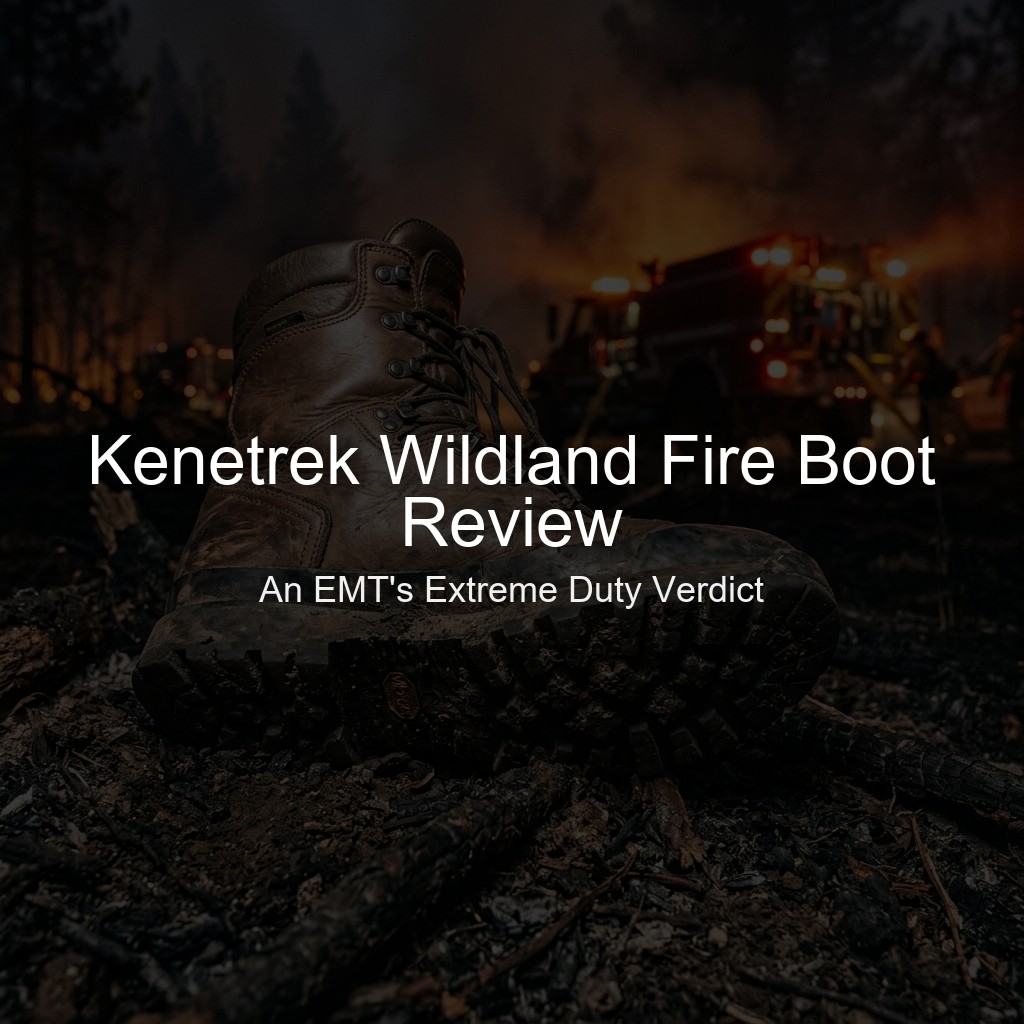
The Kenetrek Wildland Fire Boot is built specifically for these severe conditions. Highly recommended by dual-role firefighter-EMTs, this boot is designed to withstand extreme thermal exposure and rugged mountain terrain. In this review, we examine the construction, field performance, and durability of this premium safety boot based on real world experience.
The defining feature of the Kenetrek Wildland Fire boot is its safety certification. It meets all requirements for the NFPA 1977 standard. This standard governs protective clothing and equipment for wildland firefighting. To earn this certification, every component of the boot must undergo rigorous testing.
Standard nylon boot laces will melt when exposed to the high radiant heat of a forest fire. Kenetrek uses fire resistant Kevlar laces that do not burn or melt. The boot features heavy duty steel lace locks that allow you to customize the tension over your instep and ankle. This ensures the boot remains secure during long hikes. It also prevents the laces from coming undone in heavy brush.
Every seam on the boot is stitched using fire resistant Nomex thread. Nomex is a high temperature resistant fiber that does not support combustion. This ensures that the boot seams do not pull apart when exposed to hot embers, ash, or direct contact with heated ground. The double and triple stitching in high stress areas ensures long term durability under pressure.
A common question is why these boots do not have a steel or composite toe. Under NFPA 1977 standards for wildland fire, steel toes are not permitted. Steel acts as a thermal conductor. It absorbs heat rapidly and retains it, which can cause severe burn injuries to your toes on the fire line. Kenetrek designs this boot with a soft toe to keep your feet safe from extreme thermal transfer.
Kenetrek is famous for making premium mountain hunting boots. They brought that exact engineering to this duty boot, resulting in a level of support that traditional tactical boots cannot match.
The boot features a deep, aggressive K-Talon outsole. This tread is designed to bite into steep dirt slopes, muddy trails, and loose gravel. Unlike urban duty boots with flat soles, the K-Talon sole provides the positive traction needed to climb high-angle ridges safely while carrying heavy medical gear packs. The compound of the rubber is also heat resistant. It will not melt or degrade when walking on hot ash.
The upper is constructed from one-piece, thick 6-ounce oil-tanned leather. This leather is extremely resistant to abrasions, punctures, and water. The one-piece design eliminates seams at the flex points of the ankle. This reduces the risk of water penetration or seam blowout. The leather is thick enough to protect your ankles from sharp rocks and briars, yet it softens up beautifully once broken in.
Underneath your foot is a full length, 7mm nylon fireboard midsole. This midsole provides exceptional longitudinal stiffness. When you are standing on a steep slope, a soft boot will bend, putting massive strain on your calves and Achilles tendons. The stiff fireboard midsole supports your weight, allowing you to stand comfortably on steep angles for hours without fatigue.
To evaluate the Kenetrek Wildland Fire boot, we put it through three realistic field testing scenarios that wildland medics face during active operations.
Carrying a backboarded patient down a steep, unmaintained trail requires perfect balance and ankle support. Standard tactical boots can roll or slip on loose scree. The Kenetrek boot, with its 10-inch height and heavy-duty lacing system, locked my ankles in place. The K-Talon sole bit into the loose dirt, preventing any sliding. The stiff midsole allowed me to drive my heels into the slope to act as anchors.
Medics often have to walk through recently burned areas to reach injured crew members. The ground can still contain buried hot spots and smoldering ash. The heat-resistant soles of the Kenetrek boot handled the temperature without softening or transferring heat to the bottom of my feet. The Nomex stitching held up perfectly against abrasive soot and debris.
Accessing a remote scene often involves crossing shallow streams or marshes. The thick 6-ounce oil-tanned leather upper blocked water completely. Because of the one-piece vamp construction, there were no seams to leak. My feet remained dry even after stepping into ankle-deep water.
Both of these boots meet NFPA standards, but they are designed for different operational environments.
| Feature | Kenetrek Wildland Fire Boot | Danner Modern Firefighter 8” |
|---|---|---|
| Primary Use | Wildland / Mountain | Urban / Structural / Dual-Role |
| Outsole | K-Talon Aggressive Lug | Vibram S587 Fire & Ice |
| Toe Protection | Soft Toe (NFPA compliant) | Non-Metallic Composite Toe |
| Height | 10 Inches | 8 Inches |
| Lacing | Traditional Eyelets & Hooks | Speed Lace System |
| Waterproof Barrier | Oil-Tanned Leather | Danner Dry Membrane (ASTM F1671) |
If your shifts involve hiking steep mountains, crossing rough terrain, and working in remote areas, the Kenetrek is the superior choice due to its height and aggressive tread. If you work in an urban area where you face vehicle accidents, falling debris, and potential biohazards, the Danner is the better option due to its composite safety toe and pathogen certification.
Because of the thick leather construction, proper sizing is critical. Do not expect these boots to feel like sneakers out of the box.
The Kenetrek Wildland Fire Boot is not designed for the average urban transport EMT. However, for search and rescue crews, wildland fireline EMTs, and dual-role firefighters, it is an indispensable tool. It offers the ankle stability of a high-end alpine hiking boot with the strict fire safety ratings required to work near active fire lines. It is a long-term investment in your physical safety.
Compare this option with other footwear in our complete guide to the best EMS boots or look at our recommendations for the best EMS pants.
The thick 6-ounce oil-tanned leather upper is highly water-resistant. While it does not contain a membrane like Gore-Tex (which can degrade under high heat), regular application of Kenetrek boot grease will keep the leather completely waterproof while maintaining breathability.
No, this boot is a soft-toe model. Steel toes are not permitted under NFPA 1977 standards for wildland fire because steel conducts heat rapidly, putting the foot at risk for severe burn injuries.
They weigh approximately 4.2 pounds per pair, which is remarkably lightweight for a heavy-duty, high-performance mountain fire boot.
Use only water-based boot care products. Avoid using heavy animal oils or mink oil, as these can soften the leather too much and degrade the fire-resistant properties. Kenetrek recommends their proprietary boot grease.
About the Author
I'm a veteran EMT with 13+ years of field experience in EMS. I started EMT Training Station to help aspiring EMS professionals get the information they need — from training and certification to gear and career advancement. I've worked in Arizona and Michigan and participated in Hurricane Michael FEMA relief.
Compare the best trauma shears for EMTs and paramedics. Read reviews of the Leatherman Raptor, XShear, Fiskars Pro PowerArc, and standard disposable medical shears.
An in-depth review of the Armitron Sport Women's Digital Chronograph. A veteran EMT evaluates its compact resin protection, 100M water resistance, and budget shift value.
An in-depth review of the 5.11 A.T.A.C. 2.0 8" Shield waterproof safety boot. Read a veteran EMT's take on comfort, safety certifications, and durability.