EMT Shift Schedules: 24/48s & Kelly Days
Compare common EMS shift rotations. Learn how 24/48, 48/96, 12-hour Pitman schedules, and Kelly Days work, with tips on surviving 24-hour shifts.
· 7 min read
Read →
Learn how to become a Wildland Fireline EMT (FEMT). Get Red Card certified, pass the arduous pack test, and build a 14-day line bag packing list.
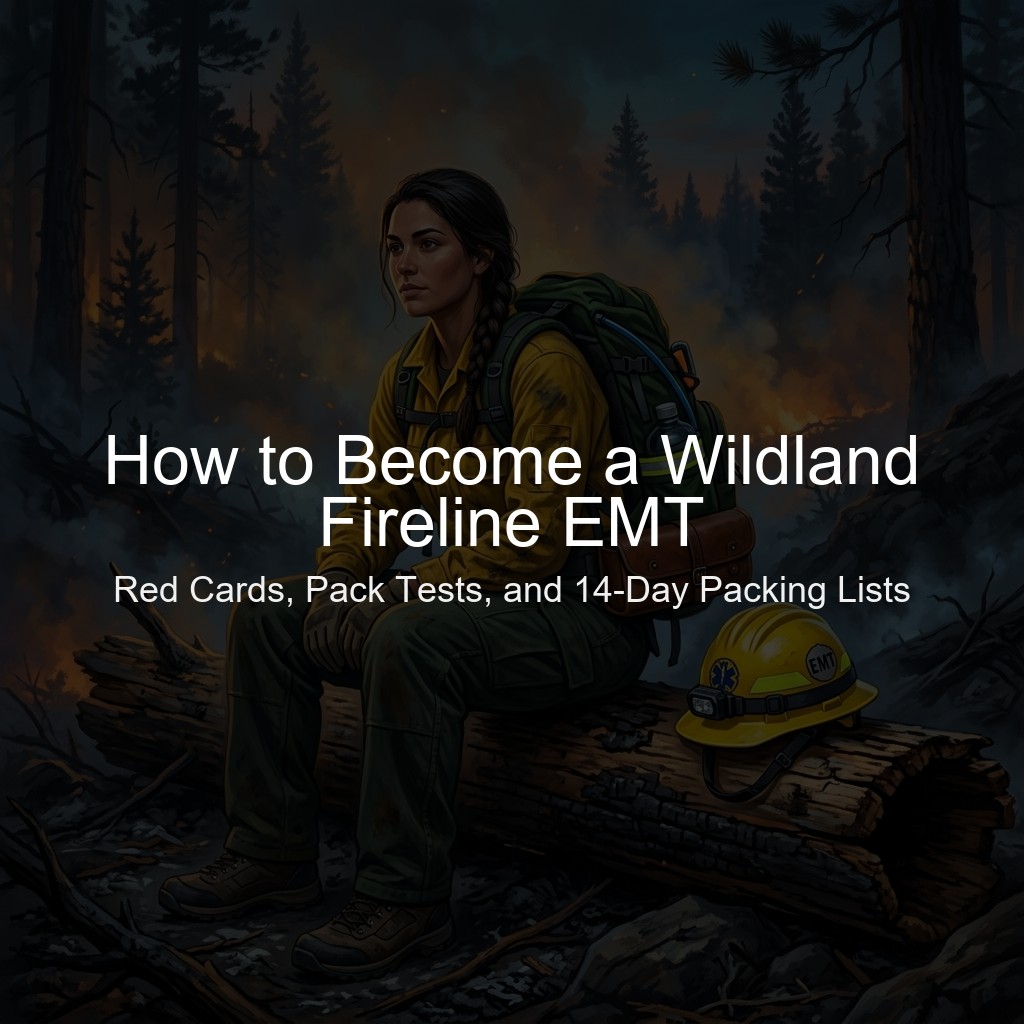
When wildfire season peaks, thousands of firefighters head into rugged, remote terrain to contain active fires. Because they operate far from standard ambulance routes and hospital systems, they rely on specialized personnel to handle medical emergencies. This is where the Fireline EMT (FEMT) comes in.
A Fireline EMT is a certified medical provider who is also a fully qualified wildland firefighter. You will hike the line with the crews, breathe the same smoke, and carry the same gear, while standing ready to handle everything from heat stroke and chainsaw lacerations to severe allergic reactions.
If you are looking for a high-paying, physically demanding, and adventurous pathway in EMS, this guide outlines exactly how to transition to the fireline.
Before committing to training, you must understand the distinction between the two primary EMS roles in wildland fire operations.
To set foot on an active wildland fire, you must hold an Incident Qualification Card, universally known as a Red Card. This card verifies to incident command that you have completed the required safety training and physical testing.
You must complete the standard wildland firefighter courses. These are available online through the National Wildfire Coordinating Group (NWCG) or local community colleges:
To work on the fireline, you must earn an “Arduous” physical rating. This is validated by passing the pack test:
When you are dispatched to a wildland fire, you must be self-sufficient for up to 14 days. Your gear is split between your Line Pack (which you carry on the active fireline) and your Red Bag (which stays on the transport truck and contains camp gear).
Your line pack must contain both fire shelter essentials and your medical kit:
This is a soft-sided duffel bag limited to 65 pounds:
Once you hold your EMT card, your Red Card, and your pack test certification, you can find work through three primary avenues:
Test your understanding of wildland EMS requirements.
Which of the following describes the difference in qualification between a Fireline EMT (FEMT) and a standard camp EMT (EMTF)?
Filed Under
About the Author
I'm a veteran EMT with 13+ years of field experience in EMS. I started EMT Training Station to help aspiring EMS professionals get the information they need — from training and certification to gear and career advancement. I've worked in Arizona and Michigan and participated in Hurricane Michael FEMA relief.
Compare common EMS shift rotations. Learn how 24/48, 48/96, 12-hour Pitman schedules, and Kelly Days work, with tips on surviving 24-hour shifts.
Learn how to become a flight paramedic. Read this step-by-step career roadmap covering clinical requirements, critical care certifications, and physical standards.
A veteran responder's guide to writing an EMS resume and passing the oral interview. Includes resume templates, certification checklists, and practice questions.