Best Trauma Shears for EMTs: Raptor vs. XShear
Compare the best trauma shears for EMTs and paramedics. Read reviews of the Leatherman Raptor, XShear, Fiskars Pro PowerArc, and standard disposable medical shears.
· 8 min read
Read →
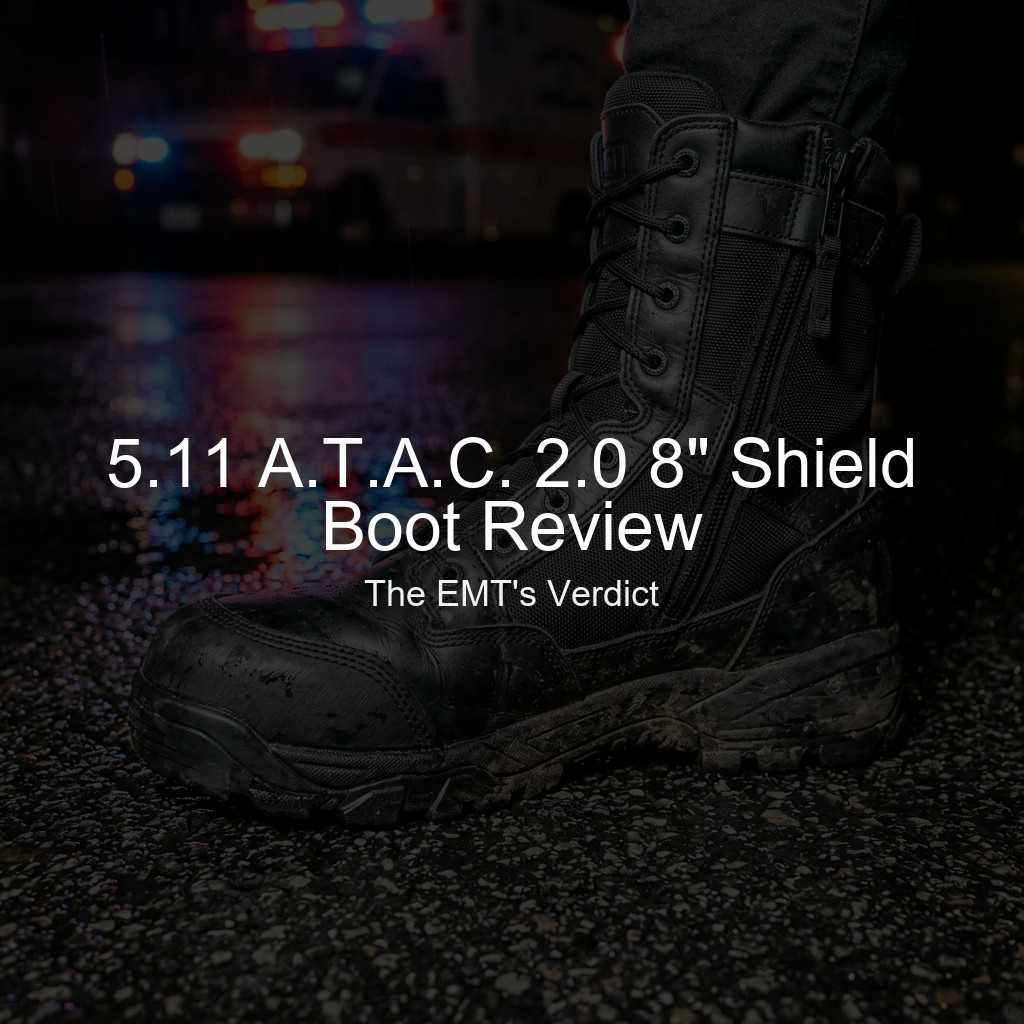
An in-depth review of the 5.11 A.T.A.C. 2.0 8" Shield waterproof safety boot. Read a veteran EMT's take on comfort, safety certifications, and durability.
Last updated: June 2026
First responders do not have the luxury of choosing their environments. We work in pouring rain, freezing snow, high-speed vehicle accidents on highways, and cluttered houses. Over my decade on the ambulance, I have learned that the single most important piece of gear you buy is your duty footwear.
If your feet are wet, cold, or aching, your focus shifts away from your patient. The 5.11 A.T.A.C. 2.0 8” Shield Boot has been a standard choice in the EMS industry for years, earning the top spot in our comprehensive guide to the best EMS boots. I have worn multiple generations of this boot on duty. In this hands-on review, we will evaluate whether the current generation lives up to its reputation for safety and comfort.
When you are buying EMS boots, you cannot just grab a pair of hiking boots from a local sporting goods store. EMS work requires specific safety ratings. The A.T.A.C. 2.0 Shield is built to meet the strictest industrial standards.
Every pair of A.T.A.C. Shield boots is stamped with the ASTM rating. If you look at the tongue label, you will see a series of codes. Let us break down what those codes actually mean for you on a shift:
For Canadian medics, this boot also meets the CSA standards. This means it offers certified protection against compression, sole punctures, and electrical discharge. It covers you regardless of which side of the border you practice on.
EMTs and paramedics deal with a wide range of fluids. Standard waterproof membranes like Gore-Tex keep water out, but they are not always tested to resist microscopic pathogens.
The 5.11 Shield features a proprietary SlipStream™ waterproof membrane. This membrane is certified to resist bloodborne pathogens.
During winter shifts, this membrane serves a dual purpose. It blocks slush, snow, and rain, keeping your feet dry. When paired with high-quality wool socks, your feet stay warm in sub-freezing conditions. The Agion antimicrobial lining treatment also works to prevent odor-causing bacteria from building up inside the boot.
Older safety boots relied on steel toes. While steel is strong, it has two major drawbacks for first responders:
The A.T.A.C. 2.0 Shield solves this by using a Carbon-TAC carbon fiber composite safety toe. Carbon fiber is incredibly strong and lightweight. It meets the exact same ASTM impact and compression standards as steel, but it does not conduct cold. During winter calls on frozen asphalt, your toes remain noticeably warmer.
Most first responders prefer side-zip boots. When you are asleep in the station bunk and the tones go off at 3 AM for a cardiac arrest, you do not have time to lace up an 8-inch boot.
The YKK medial zipper allows you to slip the boot on, zip it up, and head out the door in seconds. The zipper is backed by a waterproof gusset to maintain the boot’s waterproof integrity, and a hook-and-loop tab secures the zipper pull to prevent it from sliding down during activity.
A boot can have all the safety ratings in the world, but if it hurts to wear for a 12-hour shift, it is useless. The comfort of the A.T.A.C. 2.0 comes from its interior design.
The boot features a full-length, dual-durometer Ortholite® footbed. The bottom layer is firmer to provide structural arch support, while the top layer is cushioned to absorb shock.
Ortholite ankle foam wraps around the collar to lock your heel in place, preventing the rubbing that causes blisters.
One common complaint with tall duty boots is stiffness. Walking up flights of stairs with a heavy cot or squatting to treat a patient can feel awkward. 5.11 added an Achilles heel flex zone to the rear collar of the boot. This fabric panel allows your ankle to flex naturally without pulling the heel of the boot off your foot. It gives the boot a sneaker-like feel when running or climbing stairs.
5.11 uses their Shock Mitigation System in the midsole. This system dampens the impact of walking on hard concrete or jumping down from the ambulance box. It distributes weight evenly, reducing lower back and knee strain over long shifts.
Fit is critical for duty boots. Based on user reviews and personal experience, here is what you need to know before ordering:
Every piece of gear has trade-offs. Here is an honest look at the strengths and weaknesses of the 5.11 A.T.A.C. 2.0 Shield:
If you are a student or work in a low-risk transport role, you might be able to get away with a cheaper, non-safety boot. However, if you work 911 EMS, structural firefighting, or tactical response, the safety features of the 5.11 A.T.A.C. 2.0 8” Shield are essential.
The combination of the lightweight Carbon-TAC toe, puncture-resistant plate, and bloodborne pathogen membrane provides peace of mind on unpredictable scenes. When you consider the orthopedic support of the Ortholite footbed and the convenience of the YKK side zipper, this boot is well worth the investment. It is a reliable tool that protects your feet so you can focus on protecting your patients.
For more gear recommendations, see our guides on the best EMS pants and best EMT stethoscopes.
In my experience, you can expect a solid 2 to 3 years of heavy duty use out of these boots before the sole tread wears down. Regular cleaning and polishing of the full-grain leather toe will extend their lifespan.
No. The Carbon-TAC toe is made of carbon fiber, which is a composite material. It does not set off metal detectors, making it convenient if you frequently enter courthouses, airports, or secure hospital wards.
Clean off mud and dirt using a damp cloth. Because the toe is full-grain polishable leather, you can use standard black shoe polish and a soft brush to maintain a professional appearance for Class A inspections. Do not use heavy oils or grease, as they can degrade the breathability of the SlipStream membrane.
About the Author
I'm a veteran EMT with 13+ years of field experience in EMS. I started EMT Training Station to help aspiring EMS professionals get the information they need — from training and certification to gear and career advancement. I've worked in Arizona and Michigan and participated in Hurricane Michael FEMA relief.
Compare the best trauma shears for EMTs and paramedics. Read reviews of the Leatherman Raptor, XShear, Fiskars Pro PowerArc, and standard disposable medical shears.
An in-depth review of the Armitron Sport Women's Digital Chronograph. A veteran EMT evaluates its compact resin protection, 100M water resistance, and budget shift value.
An in-depth review of the Propper Women's Critical Response EMS Pant. A veteran EMT evaluates their 17-pocket layout, Teflon coating, and sizing.