EMT Shift Schedules: 24/48s & Kelly Days
Compare common EMS shift rotations. Learn how 24/48, 48/96, 12-hour Pitman schedules, and Kelly Days work, with tips on surviving 24-hour shifts.
· 7 min read
Read →
Learn how to become a firefighter EMT. Read this step-by-step career track guide covering EMT certification, CPAT fitness testing, and fire academy prep.
Last updated: June 2026
For many people, emergency medical services and the fire department are inseparable. In the modern public safety landscape, they are indeed heavily integrated. If you walk into a fire station, you will find that most of the crew are dual-certified professionals. They are firefighter EMTs who spend the majority of their shifts responding to medical emergencies rather than active fires.
If your career goal is to wear the badge and ride the big red engine, you must understand that the fastest and most reliable path to getting hired is earning your medical credentials first.
This guide breaks down the firefighter EMT career track, showing you what the training looks like, how to pass the physical requirements, and how this dual role operates in the field.
Many aspiring firefighters are drawn to the job by the excitement of fighting structure fires or performing technical rescues. However, the reality of the modern fire service is that approximately 70% to 80% of all emergency calls are medical in nature.
Municipal governments have realized that dispatching a fire engine staffed with medical professionals is the most efficient way to get life-saving care to a patient quickly. Because fire stations are strategically distributed throughout a city, fire crews can often arrive on scene minutes before a transporting ambulance.
Consequently, career fire departments have transitioned to a dual-role staffing model. If you apply to a modern career department, you will typically find that holding an active EMT certification is either a mandatory prerequisite to apply or a requirement you must complete during the probation period.
Navigating the recruitment process takes preparation, physical training, and academic study. Here is the step-by-step track to guide you through the process.
[EMT Certification] ➔ [CPAT Fitness Exam] ➔ [Civil Service Exam & Interview] ➔ [Fire Academy]Your first step should always be to complete an accredited program. The training typically takes between three to six months and involves classroom lectures, practical skills training, and clinical rotations.
To earn your license, you must:
To prepare for this academic hurdle, check out our guide on how to prepare for EMT training.
Firefighting is one of the most physically exhausting professions in the world. To prove you can handle the physical strain, you must pass the Candidate Physical Ability Test (CPAT).
The CPAT is a standardized exam containing eight events performed in sequence. You must wear a 50-pound weighted vest (simulating turnout gear) and complete the course in under 10 minutes and 20 seconds.
The events include:
Once a department extends a job offer, you will be enrolled in their recruit academy. The academy typically lasts 12 to 24 weeks and is run like a military boot camp. You will spend your days in classroom study, running physical drills, and practicing firefighting techniques under intense heat and stress.
If you want to advance your career and increase your pay, you should consider moving up to the paramedic level. The table below outlines the key differences between the two roles in a fire department setting.
| Feature | Firefighter EMT | Firefighter Paramedic |
|---|---|---|
| Certification Level | Basic Life Support (BLS) | Advanced Life Support (ALS) |
| Schooling Duration | 3 to 6 months | 12 to 18 months |
| Typical Pay Scale | Baseline salary | 15% to 25% specialty pay bump |
| Clinical Interventions | Splinting, oxygen, basic wound care | Intubation, IVs, drug administration |
| Hiring Demand | High | Extremely High |
Many municipal departments will pay for your paramedic school once you clear probation, allowing you to advance without taking on personal tuition debt. If you are interested in a seasonal or outdoor firefighting career, you can also learn how to become a wildland fireline EMT. To see how baseline wages compare before deciding on your track, check out our EMT salary guide.
After completing your medical training, you must navigate the municipal hiring pipeline:
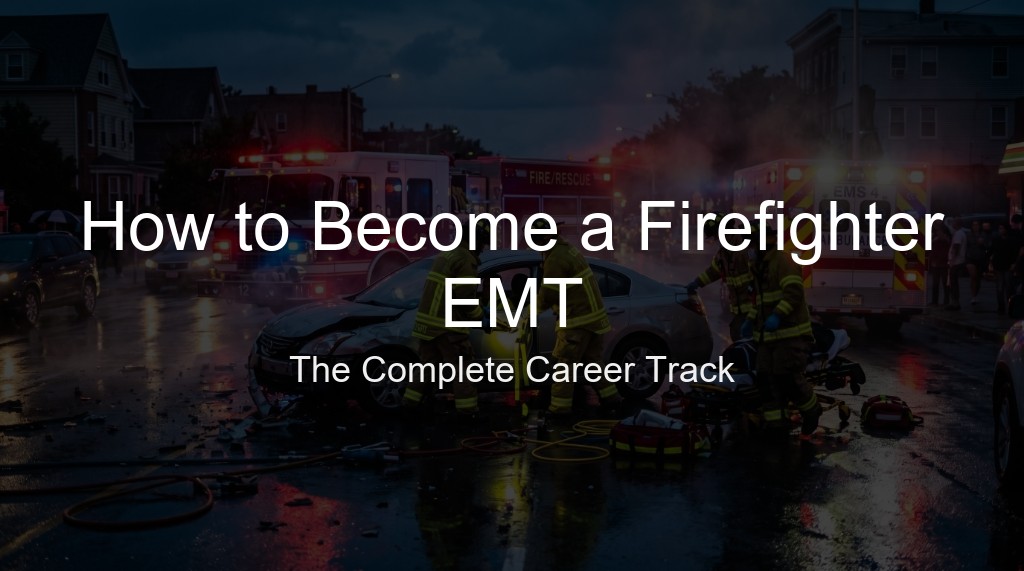
When responding to a vehicle extrication or structure fire, firefighter EMTs must balance rescue duties with clinical care.
Test your understanding of Incident Command System (ICS) protocols, CPAT fitness standards, and dual-role medical scene management with this interactive practice quiz.
During a multi-agency response to a warehouse fire, which organizational system is utilized to ensure clear command and communication?
Filed Under
About the Author
I'm a veteran EMT with 13+ years of field experience in EMS. I started EMT Training Station to help aspiring EMS professionals get the information they need — from training and certification to gear and career advancement. I've worked in Arizona and Michigan and participated in Hurricane Michael FEMA relief.
Compare common EMS shift rotations. Learn how 24/48, 48/96, 12-hour Pitman schedules, and Kelly Days work, with tips on surviving 24-hour shifts.
Learn how to become a Wildland Fireline EMT (FEMT). Get Red Card certified, pass the arduous pack test, and build a 14-day line bag packing list.
Learn how to become a flight paramedic. Read this step-by-step career roadmap covering clinical requirements, critical care certifications, and physical standards.