EMT Shift Schedules: 24/48s & Kelly Days
Compare common EMS shift rotations. Learn how 24/48, 48/96, 12-hour Pitman schedules, and Kelly Days work, with tips on surviving 24-hour shifts.
· 7 min read
Read →
Discover why cybercriminals target Patient Care Reports, how medical identity theft threatens patients, and how to verify sketchy links with PhishPond.io.
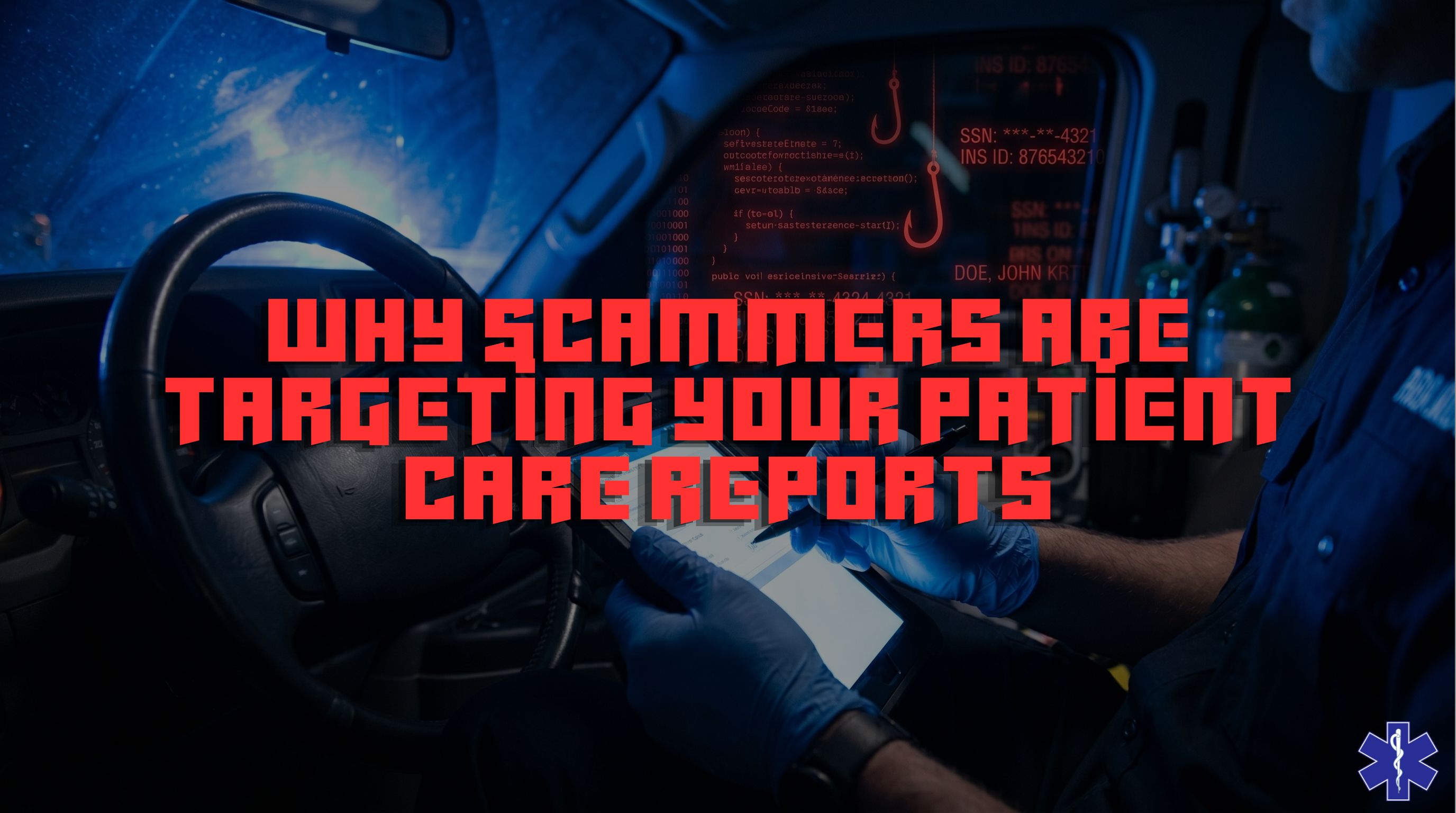
Imagine it is 03:00 on a rainy Tuesday morning. You just finished scraping a combative patient off the floor or running a textbook cardiac call. Now, you are sitting in the dim light of the station bunk room or the driver’s seat of the rig, mindlessly clicking through dropdown menus to finish your documentation. To you, that Patient Care Report (PCR) is an annoying administrative chore standing between you and a few minutes of sleep.
To a modern cybercriminal, however, that exact half-finished narrative is a premium financial asset.
As emergency medical providers, we are trained meticulously to protect our patients from physical trauma, environmental hazards, and infectious pathogens. Yet, the modern threat landscape has expanded far beyond the streets. Today, medical data has become one of the primary targets for international scammers. Understanding why your documentation is so valuable — and learning how cybercriminals attempt to steal it — is the first step in defending the people inside your ambulance long after you drop them off at the hospital.
This risk touches every level of EMS, from entry-level EMTs carrying basic certification all the way up to experienced paramedics. If you work in EMS, your agency’s data systems are a target.
To understand the danger, you have to look at the cold math of the digital underworld. If a hacker manages to breach a retail database and steal a bundle of credit card numbers, those cards sell on dark web marketplaces for a few dollars a piece. Financial data is incredibly cheap because banks have become exceptionally fast at spotting anomalies. The moment a victim notices a weird charge on their phone app, they freeze the account. The stolen credit card instantly becomes a useless piece of plastic.
A complete emergency medical chart is entirely different. It contains a permanent, unchangeable blueprint of a human being’s life.
Social Security numbers, home addresses, insurance policy IDs, dates of birth, and detailed clinical histories cannot be wiped away or canceled with a quick phone call.
Because this data remains valid and actionable for years, a single patient chart can easily command hundreds or even thousands of dollars on the black market. Scammers view an EMS database not as a collection of medical notes, but as a goldmine of pristine, exploitable identities.
When cybercriminals buy these stolen charts, they do not simply use the information to open up fraudulent retail store credit lines. They target the healthcare infrastructure itself. Scammers use your patient’s stolen insurance details and clean identity to secure high-dollar medical equipment, obtain controlled prescriptions, or undergo expensive surgical procedures under a completely fabricated name.
This creates a terrifying paper trail that can actively jeopardize human life in a future emergency.
When a criminal receives medical treatment using a stolen identity, their clinical data gets permanently merged into the victim’s real electronic health record. Imagine a scenario where a previous patient of yours is brought into a local trauma bay completely unconscious after a motor vehicle accident. The attending emergency physician pulls up their historical chart to make rapid, life-saving decisions.
Because of a data breach, that chart now erroneously lists an incorrect blood type, a false history of severe medication allergies, or chronic conditions that belong entirely to a criminal. The administrative mess can take years for a victim to untangle, and the immediate clinical confusion can cause catastrophic errors in real-time emergency care.
Data breaches rarely occur because a hacker guesses a complex server password. Instead, modern scammers target the human element. They know that EMS crews are chronically fatigued, operating under tight deadlines, and constantly navigating complex bureaucratic systems. Cybercriminals craft highly specific phishing emails designed to catch a tired medic off guard during a hectic shift.
You might receive an urgent notification on a station computer appearing to come from the national registry, claiming your certification will be immediately suspended unless you click a link to verify your skills. Other common tactics involve fraudulent notices regarding payroll adjustments, uniform allowances, or urgent hospital portal tracking alerts.
Protecting your documentation does not require a degree in cybersecurity or hours of tedious administrative training. You can safeguard your patients by integrating a few basic, habit-based digital checkpoints into your daily operational routine.
Secure your hardware. Treat your PCR tablet exactly like you treat your narcotics box keys. Never leave an unlocked device resting on an emergency room counter or sitting on the front bench seat of an unmonitored ambulance.
Bypass the digital shortcuts. If you receive an urgent email demanding immediate action regarding your credentials, scheduling, or pay scale, do not click the embedded link. Open a completely separate browser window and navigate to the official portal manually.
Avoid public networks. Never log into your agency’s internal patient databases, scheduling software, or corporate email accounts using the unsecured public Wi-Fi at a local coffee shop or fast-food joint.
At the end of the day, locking down your digital data is a fundamental element of your duty to act. We take immense pride in shielding our patients from physical harm during their worst moments. Extending that same protective mindset to their personal identity is simply the next logical step in modern patient care. When we guard our documentation, we are protecting our patients’ lives long after the sirens have stopped.
If you are still early in your EMS career, check out our guides on how to become an EMT or paramedic and the best study resources for EMT and paramedic students to build a strong foundation before you hit the field.
Filed Under
About the Author
Spicy Str0mboli is the creator of PhishPond.io, a free browser-based phishing-analysis toolkit for inspecting suspicious emails, tracing redirect chains, and detecting social-engineering tactics. He also publishes Stromboli Security and maintains IP Recon, a bulk IP-reputation tool on the Microsoft Store.
Compare common EMS shift rotations. Learn how 24/48, 48/96, 12-hour Pitman schedules, and Kelly Days work, with tips on surviving 24-hour shifts.
Learn how to become a Wildland Fireline EMT (FEMT). Get Red Card certified, pass the arduous pack test, and build a 14-day line bag packing list.
Learn how to become a flight paramedic. Read this step-by-step career roadmap covering clinical requirements, critical care certifications, and physical standards.