Best Trauma Shears for EMTs: Raptor vs. XShear
Compare the best trauma shears for EMTs and paramedics. Read reviews of the Leatherman Raptor, XShear, Fiskars Pro PowerArc, and standard disposable medical shears.
· 8 min read
Read →
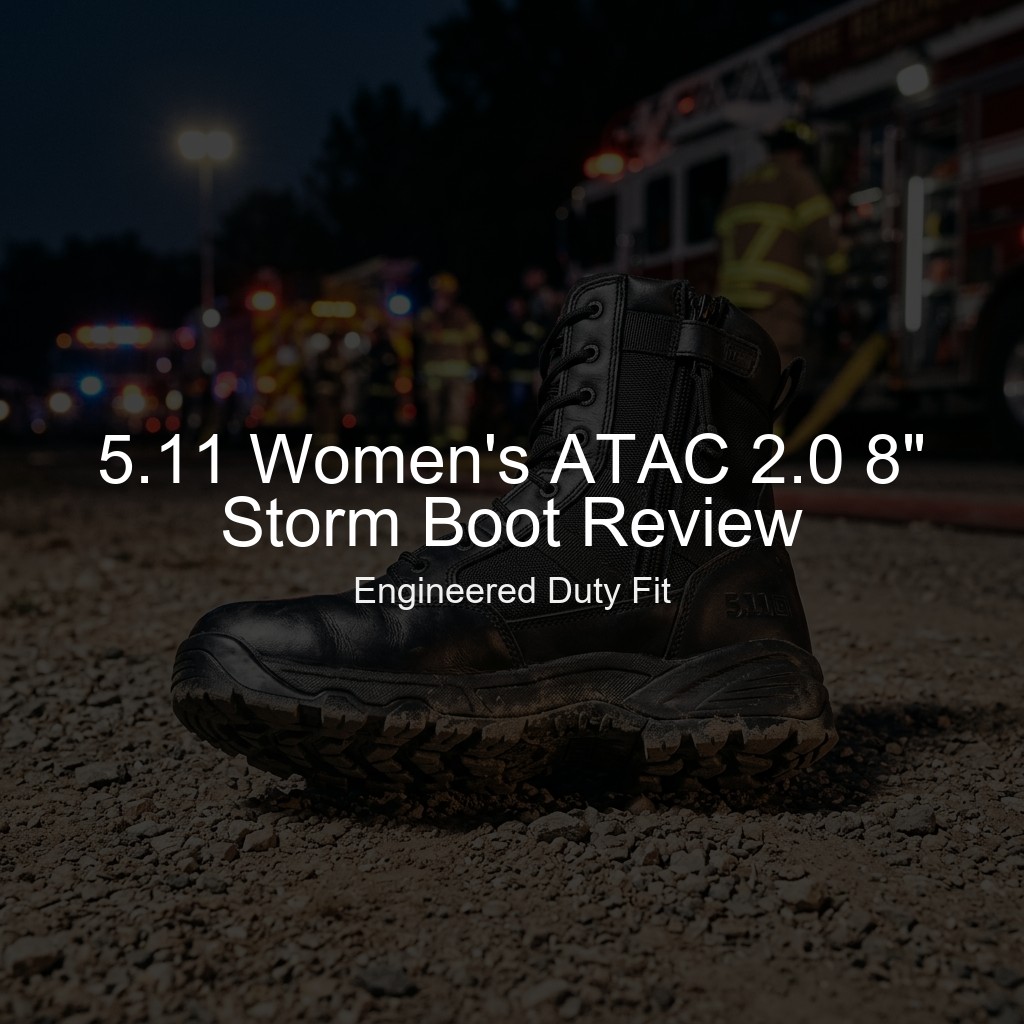
A veteran EMT reviews the 5.11 Women's ATAC Storm boot. Read details on female-specific fit, BBP pathogen protection, and shift comfort.
Last updated: April 2026
Finding duty boots that fit correctly is a persistent challenge for female EMTs and paramedics. Most duty boots on the market are built on men’s sizing models. Merely shrinking a men’s boot down to a smaller size does not work. It leaves the heel box too wide, leading to heel slippage, rubbing, and severe blistering over a 12-hour shift. It also places the arch support in the wrong spot, causing foot fatigue.
The 5.11 Women’s A.T.A.C. 2.0 Storm Boot is designed from the ground up to solve this fit problem. Built on a female-specific boot last, it provides a contoured fit that matches the anatomy of a woman’s foot. In this review, we examine the fit, features, and field performance of this popular EMS boot based on feedback from female partners and shift wear testing.
A proper duty fit is about safety and endurance. If your foot slides around inside your boot, you lose stability when carrying patients down stairs or walking over slick terrain. The design of this boot focuses on key anatomical differences.
The women’s A.T.A.C. features a narrower heel cup and a tighter instep compared to the men’s version. This locks your heel firmly into the back of the boot, eliminating the slippage that ruins boot linings and causes blisters. The arch is contoured to match a female foot arch. This provides targeted support during long shifts on hard station floors, which reduces underfoot strain and prevents early fatigue.
Comfort is supported by a full length, dual-density Ortholite footbed. The insole provides excellent shock absorption under the heel and ball of the foot. This is crucial when jumping down from the ambulance box or running to a scene. The breathable open-cell structure of the foam also helps manage moisture inside the boot, keeping your feet cool in warm weather.
A common complaint with tall duty boots is stiffness at the back of the ankle. To solve this, 5.11 integrated an Achilles flex zone in the rear collar. This fabric panel allows your ankle to move freely when crouching to treat patients or driving the rig. It gives the boot a sneaker-like feel while maintaining lateral ankle support.
EMS calls expose your footwear to wet weather and hazardous fluids. The Storm is built to keep you dry and protected.
The boot features 5.11’s proprietary SlipStream membrane. This layer is waterproof and certified to resist bloodborne pathogens. When responding to major trauma scenes or working in heavy rain, the membrane prevents infectious fluids and water from reaching your skin, providing peace of mind. It acts as a micro-barrier against infectious fluids.
The upper combines full-grain leather and high-abrasion nylon. The toe section is constructed from polishable leather, allowing you to maintain a professional Class A uniform appearance for inspections. The suede and nylon sections keep the boot flexible and breathable in warm climates, preventing heat buildup.
Lacing up an 8-inch boot when tones drop at 3 AM is a major inconvenience. The medial YKK side zipper allows you to slip the boot on and zip it secure in seconds. A secure hook-and-loop strap covers the zipper tab to keep it from rattling or sliding down while you walk. The zipper is backed by a waterproof gusset to maintain the boot’s waterproof integrity.
To evaluate the performance of the 5.11 Women’s ATAC Storm boot, we gathered feedback from female paramedics who wore them through common shift scenarios.
Tones drop in the middle of the night for a pediatric emergency. You have seconds to get out of bed and into the ambulance. The paramedic slipped these boots on, zipped them up, and secured the hook-and-loop tab in less than six seconds. There was no need to adjust laces or struggle with tight collars.
Responding to a multi-vehicle collision on a rainy highway involves stepping through mixed fluids. The medic worked in a confined space inside a wrecked vehicle to stabilize a patient. The SlipStream waterproof membrane blocked cold rain and patient fluids, keeping her feet dry and safe from pathogen exposure.
Managing an agitated patient on a slick linoleum corridor requires stable footing. The slip-resistant outsole gripped the waxed floor immediately, providing positive traction during the interaction. The narrow heel cup kept the medic’s foot from shifting inside the boot, ensuring complete ankle stability.
It is important to understand how the women’s model differs from the standard men’s model:
| Feature | Women’s ATAC 2.0 Storm | Men’s ATAC 2.0 Shield |
|---|---|---|
| Boot Last | Female-Specific Last | Unisex / Men’s Last |
| Heel Width | Narrower, Contoured | Standard / Wide |
| Toe Protection | Soft Toe | Carbon-TAC Composite |
| Waterproof Membrane | SlipStream (BBP Certified) | SlipStream (BBP Certified) |
| Weight per Boot | 1.4 lbs | 1.8 lbs |
| Outsole Style | Multi-Traction Rubber | Multi-Traction Rubber |
The key difference is the boot last. The women’s version is significantly lighter and built with a narrower heel pocket. This prevents heel slippage, which is the leading cause of blisters for female responders. However, the women’s Storm is a soft-toe boot, whereas the men’s Shield features a carbon fiber safety toe.
For female first responders seeking a duty boot that actually fits their feet, the 5.11 Women’s A.T.A.C. 2.0 Storm Boot is an outstanding selection. It offers the specialized pathogen protection and speed of a high-end tactical boot, combined with an anatomical fit that keeps your feet blister-free. It is a reliable tool that supports you through every call.
Compare this with other duty footwear in our best EMS boots comparison guide or read our recommendations for the best EMS pants.
Yes, it features the proprietary SlipStream waterproof membrane, which is designed to keep water out while allowing sweat and heat to escape, ensuring dry feet in wet weather.
No, this specific model of the Women’s ATAC Storm does not feature a composite or steel safety toe. It is a soft-toe duty boot designed for speed and comfort.
For standard EMS shifts, the boot typically lasts 2 to 3 years before showing significant wear on the outsole tread. Regular cleaning and polishing will extend the life of the leather upper.
No, the side zipper is backed by a waterproof neoprene gusset. This folding barrier blocks water and fluids from entering the boot through the zipper teeth.
About the Author
I'm a veteran EMT with 13+ years of field experience in EMS. I started EMT Training Station to help aspiring EMS professionals get the information they need — from training and certification to gear and career advancement. I've worked in Arizona and Michigan and participated in Hurricane Michael FEMA relief.
Compare the best trauma shears for EMTs and paramedics. Read reviews of the Leatherman Raptor, XShear, Fiskars Pro PowerArc, and standard disposable medical shears.
An in-depth review of the Armitron Sport Women's Digital Chronograph. A veteran EMT evaluates its compact resin protection, 100M water resistance, and budget shift value.
An in-depth review of the 5.11 A.T.A.C. 2.0 8" Shield waterproof safety boot. Read a veteran EMT's take on comfort, safety certifications, and durability.